Showing posts with label debate. Show all posts

Web clips for 1/31/10 iPad™ Edition!!!!!

0 comments

Meet the iPad™. It's a magical and revolutionary device. Magical....really? is it really magical?

It's certainly popular.

Everything is certainly abuzz. Even Pee-Wee's got one. MadTV predicted it.

But it's probably not magical. Yea, not magical. What I notice is that it's priced at $500 for the base model, with just 16GB of storage. The 64GB model brings it up to $700. You can buy 2 fairly powerful netbooks for that price. And at least they'll have USB, Flash, and a 160GB hard drive. 

And no flash. Looks like Apple hurt Adobe's feelings. To the extent that they supposedly "played the porn card." Though that turned out to be just an employee making a joke.


It seems it's a bit like Obama.


People certainly have great expectations for it. They say it's going to kill the Kindle. The accessory market is gonna explode. Google had better watch out. It'll jump-start the job market. And it's even going to change the way kids grow up. Really. it's just that cool. I hear it'll also give you a blowjob if you buy the app.

But seriously people, where are our priorities?

With all of this controversy flying around, I'm reminded of just one thing.

Nintendo 64: The Best Multiplayer Console?

2 comments

So, full disclosure, I've only ever personally owned two video game consoles: one was the Sega Master System II (which maybe I'll talk about later), and the other was the Nintendo 64. I personally haven't felt the need to invest in any other console since. But unfortunately, last year all of my games and controllers for my N64 were stolen (bummer right?) and I've been unable to play my precious since.


But this summer I've been going through the process of re-buying my peripherals and library of games (and probably picking up a few new ones), because I will be providing the N64 goodness in the living room of an on-campus house come fall semester (which I'm mad exited about). Though I'm not here to ramble on about the N64 being the best console ever (I would never make a claim like that, because it's basically all personal preference/ dependent on the games). Though I do think each console has its strengths and weaknesses, and where the N64 really shines, is multiplayer. Here's why:


~~First off, the hardware, It's designed to work well with multiple people:

~There's four plugs for controllers by default, which is way more convenient than the PS1/2 or any predecessor. Sure, you could buy an adapter, but it's just much more convenient to have four player capability from the get-go. It also means that most games had four player multiplayer support, and developers spent more time refining the multiplayer component.


~The controllers, while a little odd, were pretty damn durable (unless you played a lot of mario party), easy to clean after nights of Mario and Pizza, and introduced some great innovations like joysticks, trigger buttons, and expansion slots. The controller ports also were secure enough, but popped out easily with a good yank, meaning the N64 was immune to overly exited moments, and tripping over the wire wouldn't send the console flying off of the shelf.
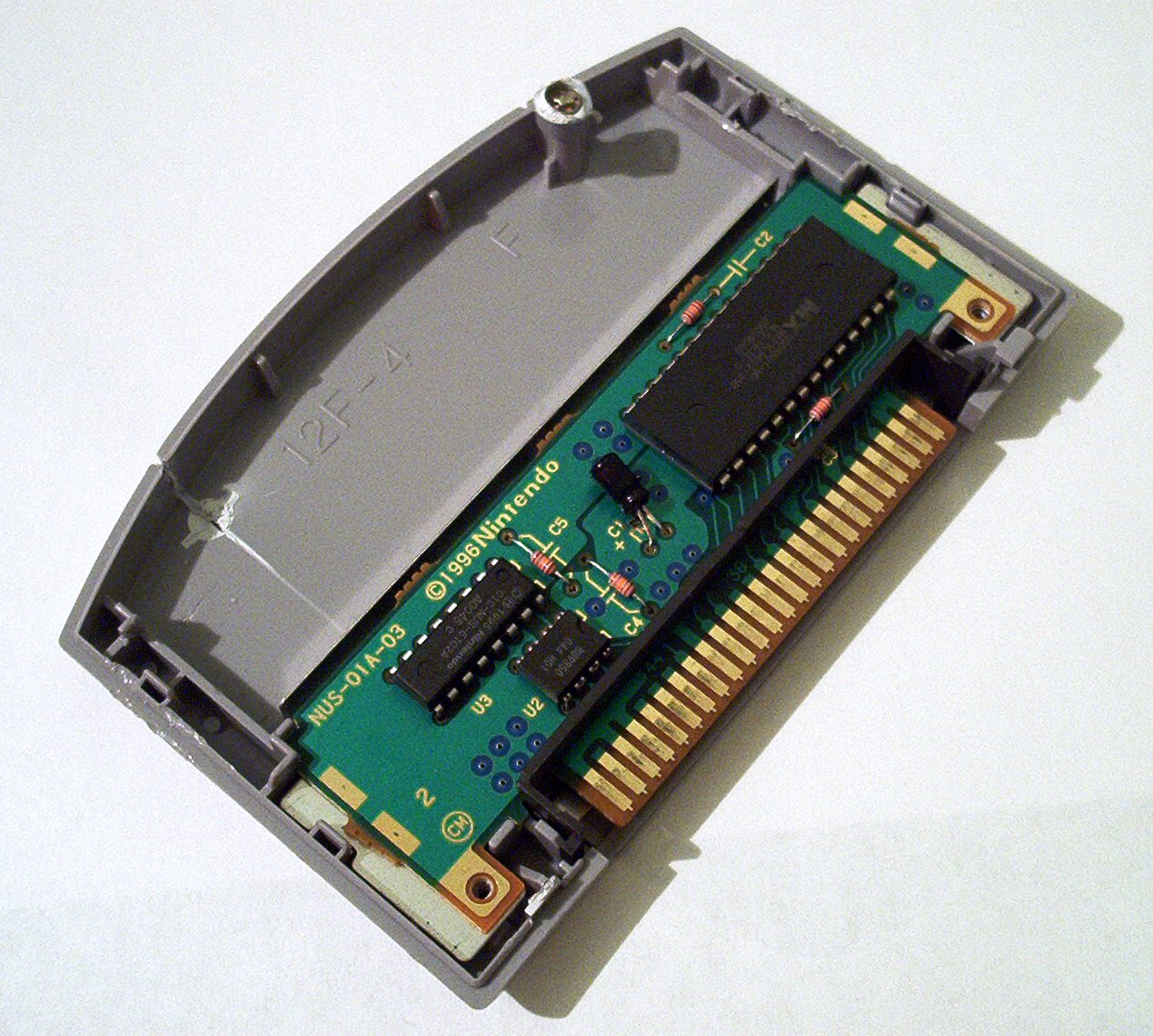


~The cartridge system is optimized for multiplayer games. While there were technical disadvantages in the form of small storage size, resulting in stretched, low-res textures (though this was offset by the N64's graphics chip, which was capable of trilinear filtering, making textures smooth). For multiplayer they were awesome. First, cartridges can't be scratched accidentally, and while there were issues (who's never needed to blow on a cartridge?), on the whole they were much more durable than pretty much any other media. They're also much faster, meaning almost zero loading times. Who wants to wait to start up some Smash Brothers or Goldeneye? Not me. Also, the small storage size is much more fitting for a simple multiplayer racing game or fighter rather than a single player epic with large levels or an expansive RPG.


~~Second, It's all in the games, Fu. Let's check out some real multiplayer gems: 


This game redefined the fighter and possibly multiplayer gameplay. The physics of the original stand out to me as being much better than its successors. There's not as many characters as the other games, but damn the original is hard to beat in sheer multiplayer fun. There was a ton of different modes, as well as the ability to fight on a team. The items were fun and varied. I don't think there's any gamer who can't give you a long and hilarious anecdote about a night filled with the original Smash Brothers.


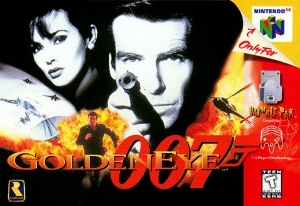
As well as being genre-defining single player classics, Goldeneye and Perfect Dark had insanely fun multiplayer FPS action. Whether it's the satisfaction (or frustration) from blowing someone up with a proximity mine in the library in Goldeneye, or the shared sense of success that comes with ganging up to defeat that PerfectSim in Perfect Dark, both of these were solid contenders for hours of multiplayer fun.


The N64 really excels in racers, and Mario Kart 64 is no exception. Featuring a ton of new game modes as well as full 3d environments, four players, and a whole slew of changes that really solidified the franchise, Mario Kart 64 is a blast.


This game is a tad debatable, as it's primarily a single player game, but the multiplayer is certainly nothing to laugh at. Four players can duke it out in the Arwing aircraft, the Landmaster tank, or as a character on foot, with a bazooka. The single player is also really fun to watch, has a lot of replay value, and is pretty short. The levels are short enough to alternate between people. Not all games need to be the centerpiece of the party, and this is where Starfox 64 really excels.
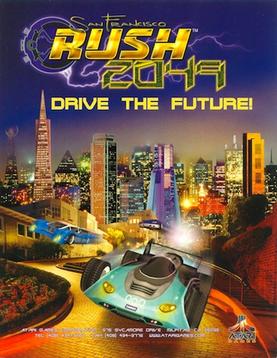


Futuristic rocket cars WITH WINGS? Check. Highly detailed futuristic version of San Francisco? Check. Awesome multiplayer race modes? Hellz yea check. Rush 2049, as well as enjoying great success in the arcades, had a whole slew of great ways to play in the home. One of my favorites was battle mode, which put you against up to 3 other players in a large map filled with tons of different weapons including rockets, lasers, gatling guns, and sonic blasters, which sent out a shockwave of sound that killed anything within a general area. There's also stunt mode, where players drive around a map filled with ramps, and use their wings to pull tricks and score points. The more insane the stunt, the more points received. There's a slew of customization options, parts and colors for every car. A racing game that really has a ton of great features for every type of racing fan.


~Pokemon Stadium: Sure now it's a little dated, but this game isn't any less fun. And don't forget all of the awesome pokemon-themed mini-games that can be played by up to four people. There's the Ratatat race, the Sandshrew dig competition, Ekans throwing, and a ton of other awesome fun games. The main battle is no multiplayer slouch either, enabling anyone to battle eachother's pokemon. Who doesn't love to see their pokemon battle in full 3D, with a huge crowd cheering them on and the announcers awesome cheesy lines: "Oh it's Charizard!" "But is it down and out!?" and straight from the game boy: "Critical hit! It's Super Effective" Nowadays everyone's got thier old red/blue cartridges lying around with all level 100 pokemon. Well put them to the test!


~Mario Party: A true party video game consisting of 50 mini-games. Mario Party is not only accessible to everyone, but really, really fun. It's led to 7 sequels, and for good reason. There's something for everyone in Mario Party. Be careful, though, the mini-games tend to be hard on your controller. That's mostly because people tend to get really into them.


~Destruction Derby 64: A greatly enhanced version of it's PlayStation counterpart, Destruction Derby 64 is, again, not your typical racer, there's a ton of game modes, including the unique "bomb tag." Bomb tag starts off with up to four players, and several NPCs. There's one "bomb" that can be passed from player to player by crashing into eachother. Hold on to the bomb to score points, but too long, and you'll explode. There's also straight, last-car-standing, destruction derby. And destruction races, where half of the players start at one side of the track, and the other half start at the other end. There's tons of awesome ways to have fun in this game.

There's just so many great multiplayer games out for the N64. I can't highlight all of them, so I'm going to list some more here. These are all N64 games with amazing multiplayer:

Ridge Racer 64
Jet Force Gemini
Worms Armegeddon
F-Zero X
WipeOut 64
Conker's Bad Fur Day
Gauntlet Legends
Wave Race 64
Excitebike 64
Quake 1
Quake 2
Duke Nukem 64
Duke Nukem Zero Hour
Hydro Thunder
Tony Hawk's Pro Skater 2
San Francisco Rush
Rush 2: Extreme Racing USA
Donkey Kong 64
Mortal Kombat 4
Mario Party 2
Star Wars Episode 1: Racer
Pokemon Stadium 2
Mario Party 3
Cruis'n World
Cruis'n Exotica

Hell. Of. A. List. All of these are truly awesome games. Along with some truly awesome PS1 favorites with graphical updates and new modes. There's also Gauntlet Legends, which is a hugely creative four player co-op action RPG. There's WipeOut 64, and the Quake series, which (while the graphics were better on the PC at the time) gives the N64 some great frag action. There's co-op Duke Nukem, the arcade favorite Hydro Thunder, crazy space racer F-Zero X. Jet Force Gemini allowed for third person combat with dogs and rockets, and Conkers Bad Fur Day's multiplayer was just as creative as the single player.

The N64 was by no means the perfect system, and there's a big multiplayer elephant in the room that I haven't talked about yet: Yes the Xbox 360 (also the PC, but I'm talking about consoles here). What with four player wireless controllers, internet connectivity, Guitar Hero, Rock Band, Halo 1-3, Left 4 Dead, Burnout Paradise, Rainbow Six Vegas, and a ton of other great features and games, it's sure giving the N64 a run for its money. Hell, even the Wii has a bunch of N64 games in the virtual console. Still, though, what the N64 did for multiplayer is still trying to be copied today. And certainly during its time, it was the cornerstone of every games party, and every living room that housed it.

Games as Art: A Different Perspective

0 comments
If you`re a reader of this blog, chances are you like video games, probably a lot. And if you like video games, or, for that matter, if you`ve ever heard of video games, chances are you`re familiar with the debate about whether or not video games are art. It`s a debate that`s been going on for a while, and while a lot of people are understandably sick of it and just want to get on with playing whichever video games they like, I`m glad it`s being addressed on The Tartar Sauce, since, as Bobbicus noted in his excellent post, the debate`s way more complicated than how video games can be classified. Everyone has different perspectives on what art is, and how people classify art influences the reasons why people may or may not think that video games are art. Because of this, there are infinitely many sides to this debate, which is one of the many reasons why it still hasn`t been resolved. I know I`m kind of just repeating what Bobbicus said, but that`s just because I totally agree with that point, which is essential to my argument.
When many people hear the word art, they get images in their heads of aesthetically perfect images, or revolutionary statements, or avant-garde modern artworks. But not all art can, or should, be put on this high of a pedestal. This is why terms like "high art" and "low art" exist (which, in my opinion, are bullshit terms, but I`ll get into that another time). People use the word art to put things on high pedestals all the time; you can hear it whenever people describe a Beatles album or a Tarantino movie as a masterpiece. And this is why people often object to video games being called art; many people don`t think that video games should be elevated to the same status as Renaissance paintings. But many people ignore the fact that, well, frankly, not all art is of the same quality. Putting all your opinions aside for a second, and thinking of art in it`s most literal sense, just answer these questions. You would agree with me that the Mona Lisa is a work of art, right? And you would also agree with me that a painting by Andy Warhol is a work of art, right? After all, Da Vinci and Warhol are both referred to by everyone as artists, and artworks by both of them are prominently displayed in art museums. But would you say that both these paintings are of the same quality? Probably not. Whether you`re a traditionalist who favors skill and aesthetic beauty or a (post)modernist who thinks traditionalists just don`t understand Warhol`s critiques of pop icons, you probably think that one of these paintings is better than the other. But you would still call both of these paintings art. Just keep that in mind.
As I said before, many people disagree with the statement "video games are art" because they don`t want video games to be elevated to such a high status. But many of these people would probably have less trouble with the statement "video games are an art form". The first statement implies that every video game ever made is of the same quality as something like the Mona Lisa. But all that the second statement implies is that video games are something that can be used to make artworks, maybe even of the same quality as what`s shown in museums. It`s much more reasonable to say that video games are an art form. However, while that statement may be easier to accept for many people, it still implies the statement "video games are art", since, logically, something that is made using an art form is naturally a work of art.
And here`s where my argument diverges from the standard ones. All video games are works of art, in my opinion, and if you followed the last paragraph you know why. But that doesn`t mean that all video games are of the same quality. Hell, it doesn`t even mean that all video games are good. Most video games suck, quite honestly. Not all art is good. Just because something`s a work of art, that doesn`t mean it can`t suck.
Case in point: Tommy Wiseau`s The Room. I`m using a movie, rather than a video game, as my main example, but that`s because right now I`m just discussing art in general. Film started out in a similar way to video games. Lots of early films, just like a lot of games from my childhood, were educational, and many people realized quickly that movies, just like games, had enormous commercial potential. Film soon became a primarily commercial medium, and early silent films made huge amounts of money, just like early 8-bit games, both of which are primitive by today's standards but considered cool in a retro way by some. There have been many film-makers that have managed to be commercial while still making artistic statements, for example Coen Brothers or Stanley Kubrick, and there have also been many game developers, like Suda51 (Killer7, No More Heroes) and Fumito Ueda (Ico, Shadow of the Colossus), that have done the same thing. But there are also many less well-known film-makers (Jean Cocteau, Stan Brakhage, and countless others) who have used film as a medium solely for art with no commercial intentions. And, likewise, there are many video game developers (like Daniel Benmergui, who Bobbicus mentioned earlier) who have used video games in the same way.
Anyway, that`s the background. I haven`t actually defined what I think art is yet, and I probably should, so here goes. I think it`s fair to say that art is anything made for non-practical use that is supposed to convey a message or create an emotional state. The Room, a film by Tommy Wiseau, is, by that definition, art. It obviously has no practical purpose, and it is obviously supposed to convey a message and create many emotional states. But you can tell by watching the preview that it does neither of those.
As you can tell, this film sucks. The acting is terrible, the lines are forced and unintentionally hilarious, the characters are generic, the story is filled with plotholes, the music is overly melodramatic, and the entire film is utterly misogynistic. But that doesn`t mean it`s not art. Film is an art form, so by definition this is art. And it`s supposed to convey a message and create an emotional state. Is The Room a work of art? Of course. Does that mean it`s good? Hell no.
When discussing whether or not video games are art, the idea that not all art is good needs to be taken into account, because it would make it easier for everyone. Video game fans are completely justified in saying that brutally violent and misogynistic games like the GTA series are art. But critics are equally justified in saying that these games are terrible, without denying that these games are art. People use the art argument as a defense mechanism all the time, but it`s a misguided defense mechanism. For example, if someone says that Half Life is too violent, a fan might defend the game by saying it`s art. And the fan would be absolutely right: Half Life is art. But that doesn`t in any way refute what the critic says. It`s a different issuse entirely.
So, basically, all video games are art. Insanely epic games like Twilight Princess? Art. Cutesy fun games like Animal Crossing? Art. Excuisitely beauiful games like Shadow of the Colossus? Art. Avant-garde, postmodern games like The Path? Art. Violent, problematic games like Manhunt? Art. Mind-bogglingly shitty games Life of D Duck? Art. Obviously, some of these games are better than others. Some of these games are more artsy than others, and some are more commercial than others. But they`re all art. And that in no way means that they`re all good.
For some more good commentary on this topic, read this, this, and this.

Little Triggers Part 3

1 comments
In response to the post in response to my post...
In my post on music piracy I talked about when it's ok to pirate a copy of an album, and I think that my argument can more or less apply to video games as well. As I said before, when a creator of an artwork has already profited a lot from that artwork, then non-physical copies of it should be made available for free.
And I think Square has already profited tremendously from Chrono Trigger. According to Wikipedia, "Chrono Trigger sold more than 2.36 million copies in Japan and 290,000 abroad." So while it hasn't done as well in America, it has still been very successful and Square has profited a lot from it. Because of that, at this point I think it's totally fine to download it illegally.
The argument that Square still gets harmed greatly by this because they just released a port of Chrono Trigger for the DS can also be refuted for several reasons.
1) The product which infringes on copyright is almost an entirely different game. As I said before, people won't play it as a substitute for Chrono Trigger.
2) While this game does essentially force people to pirate a copy of the original Chrono Trigger as well, this will in no way get rid of the market for the port, since it's for a unique handheld system. For this reason, it would make complete sense for a consumer to have as many as three copies of Chrono Trigger at once: the original, which might have been in their possession since it came out; a pirated ROM to play Crimson Echoes; and a DS version to carry around, and to use with special features. In fact, people could even have as many as four copies, since this actually isn't the first time Chrono Trigger has been ported; it was released for the Playstation in a pack with Final Fantasy IV. But I digress. The point is that since the port is for a portable system (no pun intended), especially one as unique as the DS, there will still be a market for it even if people use the illegal ROM to play Crimson Echoes.
3) We're talking about a port. A port of a port, for that matter. The DS version of Chrono Trigger is even less of a new game than the illegal one. I do agree that Square should profit from it, but since less work went into its creation than would have been put into an entirely new game, it's ridiculous to say that Square should profit as much as they did from the original Chrono Trigger. At most, the developers of Crimson Echoes should be forced to wait a little bit to release this game. Although that might even be too much, since the DS port has been around for a little while now.
So the main reason I think that this ROM hack is ok is because in this case, at this point, Square has had many chances to profit from the original work already. But are ROM hacks ok in every case? Well, in theory no. But in reality, I'd say that ROM hacks are OK the vast majority of the time. The reason is that, as I've said before, I think that piracy is OK after the creator has profited significantly from the artwork. And by the time that a game becomes significant enough for fan-made ROM hacks of it to be made, chances are the creators have already profited a ton. So if someone made a ROM hack tribute to World of Goo, for example, then that would be kind of fucked up. But that's way less likely to happen than someone making a ROM hack tribute to an emulated Final Fantasy game. So while in some instances ROM hacks are really harmful, those instances probably won't happen very often, and when they do they should just be taken in a case by case basis.
And I'll also say that because they involve illegal downloading, ROM hacks are definitely not the fairest way to go about making tribute games. But, I still think they should be protected legally in most cases, since it's even less fair to give excess profits a higher priority than a wide variety of art. While a ROM hack wasn't the best way to go about making Crimson Echoes, that's not justification for the entire game being destroyed. I understand why allowing its existence would set a bad legal standard for Square, since copyright laws allow companies to protect their products , and since this would chip away at the protection Square has of Chrono Trigger. But I honestly think that copyright laws give companies too much protection over their products. Just look at Mickey Mouse for proof of this. Disney has made millions and millions of dollars off of Mickey, and copyright laws still won't let his image be used by anyone else, even though Disney doesn't need this money anymore. I can understand why copyright laws give companies so much protection over their products; struggling companies absolutely need it. But already successful companies don't need this protection. Square doesn't need this protection. At least they don't need Chrono Trigger to be protected. Square and Chrono Trigger are so successful and so well established that even if this game means reduced sales for them, these reduced sales are not a threat, and even if other people use Chrono Trigger features in other artwork, they will never really be separated from Square. It's fair to give Square a little bit of this protection until they make a significant amount of money off of the DS port, at least considering what work was put into its creation. But Square does not need unlimited protection of Chrono Trigger. Even if Squaresoft were to somehow lose their copyright on Chrono Trigger (which is so incredibly unlikely), no one else would gain that copyright, which means that it would essentially be in the public domain, which it probably would be by now if Disney weren't so disgustingly protective of their copyrights, and which would still allow Square to profit from it more than anyone else. So I'll conclude by saying that while I'm not in favor of ROM hacks, I'm even less in favor of companies that have already benefited a lot from an artwork forcing people to buy that product when, quite frankly, they'll still make tons of money that they don't need. I wish that Crimson Echoes had been made in a different way, but I wish even more that it was able to exist.

The Sampler as Host

0 comments
Some readers of literary criticism may notice the debt that the title of this essay owes to a classic piece of Yale School deconstructive criticism, J. Hillis Miller’s “The Critic as Host,” and that debt is not altogether unintentional. Indeed, in that piece, using his trademark late-period hypnotic style to reveal the undecidability of texts, the binaries that the critic reveals, and the constant reformation of context around the “univocal reading.” But the role of the critic is central to pointing this out, and I think this paradigm can translate well to a particular artistic version of musical piracy that has emerged since the 1970s: sampling. Simply put, this is the use of a phrase or motif from a previously written song to use as a base for new lyrics, as in hip-hop, or the creation of an entirely new composition. To sketch a brief, essentializing genealogy of the popularity and artistic horizons of sampling, one can start with the whole history of hip-hop, starting from the Bronx block-party ciphers, to Run-D.M.C.’s rap-rock fusion, EPMD, the Bomb Squad, and the Beastie Boys via the Dust Brothers visionary cut-and-paste techniques, D.J. Shadow’s groundbreaking completely sample based epics (which are still not fully realized or appreciated today) to the proliferation of mash-ups and remixes that has flooded the internet recently (and college campuses with Girl Talk). But I would like to focus on a mainstream hit single that uses sampling within the legal frameworks of copyright law, but nonetheless opens up new possibilities for the medium: Alicia Keys’ 2007 song, “Teenage Love Affair.” Taking a simple riff from The Temprees’ 1972 song “Girl, I Love You,” Keys, along with her team of producers/songwriters (especially Jack Splash; he’s worked with Estelle and Solange Knowles too) construct an absolutely majestic pop single. The original, somewhat limpid, riff undergoes such a radical reanimation in the hands of Keys and her cohorts; a staggeringly catchy melody of teenage romance weaves throughout the verse, releasing into an orgiastic chorus of released inhibitions, with the climax of the song coming in its Madonna/Whore-themed bridge: Keys coos to her youthful lover, leading him through the metaphorical bases until the brakes have to be slammed: she has to go home. If this doesn’t recall the glory days of Motown (think Supremes mixed with a killer Stax-cum-hip-hop feel), I don’t know what does. But the thing is, the sample absolutely revives the original, unpacks it, brings it into its true light. The production and Keys’ performance just kills it. As noted professor/music journalist/blogger Oliver Wang (of NPR, Vibe, and Soul Sides) puts it: "[Jack Splash] gives the original loop a boost that makes this a rare case where the progeny >>> progenitor. Specifically, the way he makes the guitar even more prominent and milks the keys are what help give Alicia's song such a memorable musical hook…Some have accused Keys of going too far towards the 'big diva' vocal over-singing…I found her performance here more nuanced." Certainly, it is an impressive performance, as I have not been so transfixed by a contemporary pop song in a long time, and this is no doubt due to the horizons that Keys and Splash have opened through the sample. A parasitic relationship, of course, with the original feeding its host, but one that produces something above and beyond its foundation. The ability to write one of the best pop songs off of a simple sampled musical phrase shows sampling’s profound possibilities, and something that goes beyond hip-hop’s already astonishing achievements in the medium. Now, the question must be raised of copyright laws and the like, and frankly, this is not the area that I am an expert in or carry any weighted opinions about (see Jake’s post below for a great take on the problematic of piracy and suggested solutions). What I can say, however, is that Keys followed the rules: she gave The Temprees’ full credit and their half of the royalty check. But the lines are blurred with acts such as Girl Talk, who does not operate through this framework, but rather sees his own creations as artistic achievements in their own right, and perhaps he is right. What I can say for sure is that sampling opens up an infinite amount possibilities that exceed any context the progenitor might exist within. The sampler becomes the host, the host that allows the song to be seen as more than a unique circumstance, but as a singular artistic statement; such is the case with “Teenage Love Affair.” The questions of piracy must wait until after the event.

Wiki of the Week: Wikileaks

0 comments
Wikileaks is one of the best ideas for a wiki I've seen in a while. It allows users to anonymously publish leaks of sensitive information. This is awesome, browsing through the site you feel like a spy, there's a ton of stuff about crazy religious proceedings, under-the-table backhanded dealings. Email logs, manuals, membership lists, it's got it all.
There is one huge downside, though. Due to the shady nature of the content and people generally wishing it would go away, the site is not always up (like the last time I checked). During those times you can still browse most of it through google cache though, but it's a pain.
The site is responsible for a number of notable leaks including guantanamo bay operating procedures, a hack of sarah palins email account, and a bunch of scientology scandals.
Wikileaks main page (down)
Wikileaks main page, text-only google cache
Wikileaks on Wikipedia

Never Really Cought On Did It? Convinceme.net

0 comments
Anyone know Convinceme.net? It opened about a year ago as a place for people to argue on the internet, as if there wasn't enough of that already. It does bring some fun and interesting things to the table though. The format is brilliant and allows you to clearly see both sides of the issue. There's different modes that include open debates, 1-on-1, and king of the hill style where you may only add one argument, so it'd better be good. There's even a news section where debaters post articles and subsequent debates can be made about them. So with a cohesive and organized place for all the internetz pplz to go and spew opinion to thier heartz content, you'd think the site would be filled. but with only around 5,850 registered members, counting inactive accounts that's not nearly as much as expected. That's not even that much at all. You still get a bigger debate on any given front page digg story or gawker post. When I originally saw it I thought it could be used as a way to, "take the flamewar outside," leaving the other sites and forums with some peace and quiet. But that never happened. The upside is, with the small commuty and even smaller active community it has, most debates are fairly cohesive and non-flamey. You actually get some interesting stuff reading it. Of course the most popular debate after over a year is still Ninjas versus Pirates. I like following this guy, he's always interesting. So why did it never catch on? Are people afraid of change? Is the Post format more easy to debate with than this two-column approach? I have no idea, but why sounds like a good debate topic to me. Anyway here's ConvinceMe. Have fun.