Showing posts with label fuck yea. Show all posts

Don't Miss Out: GOG.com 1-Year Anniversary Promo

0 comments
Yea, so I guess we have ourselves a newborn section here what with all of the deals that have been floating around lately (and all of the post titles including the words "don't miss out").
This one is BIG, and fairly well known already, but if you miss it you'll probably feel such powerful regret that you'll kill yourself. So to prevent mass suicide, I feel I must warn as many as possible.
It's pretty simple: GOG.com, the awesome, awesome, awesome digital distribution site for old PC classics, is 1 year old. They're celebrating by making every game in their Interplay catalog buy one, get one free.
For serious guys, simply check any number of games in the catalog they have here (make sure it's an even number) and get them for half price. Thinking about picking up Fallout for just $6? Get Fallout 2 for free. Thinking of diving into the awesome Descent series? Get the entire series for just $6. Already have those games, no worry, there's 33 games on the list. Surely there's at least 2 fantastic games there that you haven't played.
Let's do some math here. That's 4 games for $12, 6 games for $18, 10 games for $30. 10 for $30 is the same as the amazing Steam sale that happened a few weeks ago.
Or just think, for the price of one crappy AAA title ($60) you could have 20 PC classics.
"BUT Backdoorangel!!!11!!!11!11!!! how do I know if these games are good?"
Seriously? did you read Bobbicus' testimonial? The games are also rated by the community, so you can know that these are some of the best games for the best price. Ever.
There's only about 4 days left to grab these games for this price. If you're going back to school, this is your next 2 months of procrastination. If you're not, well, the point is go and buy some sweet games.

My (geeky) Dream Girl

0 comments
When I meet my dream girl, this is the EXACT conversation we're going to have, told here in the form of a theatrical scene:

(Lights up. ME is on a computer playing StarCraft, WOMAN enters, intruiged)

DREAM GIRL: Hey, what'cha doing?

ME: (Alt+Tabs) Oh it's nothing, nothing.

DREAM GIRL: Oh no no, I'm actually interested in whatever geeky thing you're doing right there.

ME: Oh, um, well, I was, I was playing StarCraft. Trying to, build up resources.

DREAM GIRL: Oh oh, I like StarCraft.

ME: (mumbles) Huh, I'll bet you do.

DREAM GIRL: What was that?

ME: Nothing, nothing. You like StarCraft?

DREAM GIRL: Yea totally! I play it all the time. Looked like you were Protoss. If you've been AFK this long you've probably been nuked or rushed by now.

ME: Crap! (returnes playing) hey yea, thanks.

DREAM GIRL: (pause) Yea. Hey, do you want a Mountain Dew? I have an extra one here.

ME: Hey thanks! I love Mountain Dew!

DREAM GIRL: No problem. Hey, I was wondering, do you want to maybe, play StarCraft with me?

ME: (stops game) Um, yea. Absolutely!

DREAM GIRL: Great! Except, I play a slightly different version if that's OK?

ME: Um , sure, what's different?

DREAM GIRL: Well, I don't want to spoil the details, but it involves (whispers) S-E-X.

ME: S-s-sex? Really?

DREAM GIRL: I can't hold it in any longer! I love you and I want to get married and have sex and play magic and video games and go to E3 and Comic-Con and have more sex all day for the rest of our lives!

ME: Let's do it. (they kiss)

(blackout)


Don't Miss This: Ubisoft Action Deal

0 comments
Good Old Games is hosting yet another great sale, this time offering two of Ubisoft's finest entries - Beyond Good & Evil and Prince of Persia: Sands of Time at 30% off. If you buy the two together, it's a whopping 50% off. If you enjoy video games in any way, shape, and form and don't already own the GOG versions of these two games, then you must take advantage of this offer. About a decade ago, Ubisoft approached Jordan Mechner, the creator of the original Apple II Prince of Persia game, about reviving the series, but made the rather unusually decision of giving him full creative control. The result was a massive hit in 2003 that lead to two sequels, a rather lame "re-invisioning" game and an upcoming movie - and for good reason. SoT is one of the single best gameplaying experiences I have ever had, second only to Planescape: Torment. Unlike that title, which requires a massive investment in time and emotion, SoT is lighthearted, simple, and completely forgiving. For those who have never heard of the game, you play as a Prince (naturally) who is accompanying his father to visit a nearby sultan. Along the way, they realize they've forgotten to bring a gift, and in order to avoid a rather awkward faux pas they raze a nearby kingdom to the ground and steal its valuables and women to present to the Sultan. In doing so, the young prince loots the Dagger of Time, a powerful artifact that allows the bearer to rewind time. Once the caravan arrives at the palace, a traitorous Vizier tricks the prince into unleashing the Sands of Time, turning everyone in the palace into Zombies. The rest of the game consists of the prince parkouring his way through some pretty awesome scenery and acrobatically slashing sand zombies into tiny pieces. Best of all is the rewinding time feature - at any time you can rewind about 15 seconds into the game. This one feature means that most of the frustrations of a platformer simply disappear - if you miss a tricky jump, there's no need to replay a section, simply rewind and try again! It's fun, it's fast, and it's broken into manageable chunks. SoT also benefits from the fact that Mechner is a professional screenwriter. It's tale is incredibly well crafted, with believable characters who actually grow, humor, and an overall sense of completeness that's missing from most games. Buy it. You won't be disappointed. Beyond Good & Evil, on the other hand, serves as a poster child for how poor marketing can kill a product. Ubisoft released this title with little fanfare in the Christmas rush, pretty much guaranteeing that it would be lost in the deluge. Which it was. Which is a shame, because BG&E is one of the most imaginative, heartwarming and joyous games I've ever played. That may sound strange, especially with a plot involving conspiracies, abductions, and some fucking scary aliens, yet BG&E goes about its business with such goodwill and enthusiasm that it's infectious. If you do not feel charmed by Hyllis, then you have no soul. As for the game itself, the best way to describe it would be Zelda grown up. Much like that venerable series, the game is an action adventure that sees the player traversing a fleshed out world exploring, fighting, and collecting. Unlike the Zelda games, the protagonist is one of the best written characters in videogame history. Not to say that the gameplay isn't entertaining (because it is) but Jade, and her interactions with the other characters, is what makes this game. Even if you don't consider yourself a gamer, or don't really play games, I encourage you to purchase this one and try it out. How many action games have their protagonist wield a camera instead of a gun? Finally, both these games have kick-ass soundtracks, and when you buy them from GOG you get that as well! Also keep in mind that GOG games do not have any form of copy protection whatsoever, and come in a convenient downloader that installs perfectly on XP or Vista. Buy them. Seriously, do it. It's 10 bucks for two of the best games of the last decade that are easy to get into, even for a non-gamer. You don't even need super duper awesome hardware - these games are 5 years old, and scaled well even when they were new. Buy them, or you are not my friend. You have until Monday.

(Maybe) Please Don't Miss Out On This One Too!

0 comments
Wow, Steam's been going crazy with these weekend deals lately, I mean, what with the indie deal last week, and now this.

So yea, I feel like a dirty promo salesman, but this weekend Steam is selling every Half-Life game for %66 off. meaning you can buy EVERY Half-Life game (including Team Fortress Classic) for $17. OR you can buy them individually for the %66 off.

The only real bummer about this promo is that it's likely you already have most of these games (hell, these games are usually the only reason people installed Steam in the first place). Still, this means it's a good time to gift if you know someone who's never played Half-Life 2 (you can get it individually for just $7).

Of course, if you don't have any of these games, get them. There's no doubt they are of the highest quality. I mean, the Half-Life series is Valve's freakin' crowning achievement. You can get the entire Half-life 1 anthology for just $5, so they've obviously accounted for the fact that you'll have some/most of these, but geez, these are GOG.com prices on what must be the most critically acclaimed PC games ever.

So get out there, get your H.E.V. Suit on, and kill some combine.

Please Don't Miss Out On This One!

0 comments
No, really, don't miss out. I'm actually sorry for not posting this earlier- as there's not much time left, but seriously, the Steam Weekend Deal is an insane collection of some of the best indie games out there for $30. I doubt these will be cheaper than this for some time. The games are: Audiosurf, Blueberry Garden, Braid, Crayon Physics Delux, Darwinia, Everyday Shooter, Gish, The Path, and World of Goo. All of these are top-notch, innovative, shining examples of PC indie gaming at its best. Even with some underrated gems like Gish and Mr. Robot. You could buy the cheaper one for $20, but seriously, the other one is only $10 more and has 5 more games including AudioSurf and Darwinia. so why buy it? Even if you already have some of them, you can give the extra ones as gifts. Some of these were $30 when they came out alone, but today you can get ALL OF THEM for $30! so do it. Do it NOW!

Happy Birthday! Us!

0 comments
 
Yup, just one year ago, I started a blog. Now, The Tartar Sauce is totally still here, and totally more awesome.
Here's to another year of (pop) culture, video games, technology, art, or whatever else we think is interesting.

The Best Rally Game Ever, for 5 Bucks.

0 comments
So yea, there's not too many rally games out there, but there's enough. One of the better series out there is Colin McRae Rally. It's made by Codemasters (the guys behind the Dizzy series, Overlord, and a ton of racing games), and is one of their better franchises.

Colin McRae Rally 2005 improved upon a whole lot of new features and updates that happened in CMR 2004, including a new damage system, improved and new playmodes, and a ton of new tracks and cars from over nine countries. It's seriously awesome, and is one of those few racing games that really captures the feel of the dirt road. It's also got a great balance of arcade and realism, leaving (no really) something for everyone.

It's also had a nice revival in the past couple of months, since it's showed up in Good Old Games' catalog, meaning the online multiplayer is pretty populated (though get ready to be reminded of just how much you suck).

Plus, this week it's only 5 bucks. If you are at all interested (even a smidge) in racing games. Pick it up. There's hours of dirty, muddy, breakneck fun to be had here, and it's being pulled from the catalog after this week, so finding it is going to get tough pretty soon. A seriously sweet deal for a great game.

Cool Thing Of The Week: An Adventurer is You!

0 comments
So with LucasArts unloading its back catalogue on steam, and Monkey Island getting both a facelift and a new episode, adventure titles seem to be coming back into vogue. I have no less than 3 adventure games to finish on my to-do list (Monkey Island, Grim Fandango, and Sanitarium) and yet I find myself waylaid by a low-budget production by a pair of insolent limeys. Been There, Dan That is the first game in the series, and it's bloody hilarious. It's a classic point-and-click - right clicking cycles through possible actions, left clicking interacts with objects and the environment. The protagonists - Ben and Dan, of course - merrily adventure their way through alternate-dimension locals, bantering back and forth about everything from shitty American beer to how exactly Ben knows which objects are useful to pick up and which are safe to leave behind. It's full of references that seasoned adventure fans will love, and coarse (but brilliant) humor for everyone else. It's irreverent, clever, entertaining, short, and most importantly, free. Once you've finished it (and hopefully tossed some of a bizarre "L" shaped currency to the creators) then it's time to fork over a whopping $5 for the sequel Time Gentlemen, Please! Which is bigger, flashier, and even more irreverent (in the options menus, there's a slider labeled "Racism.") The story follows immediately after the end of the first game, and while it provides a quick recap for those who haven't got the time for fun you really should play through the first one...er...first. I'm not really going into the plot details because I don't think I'll be able to do it justice, but I will say this: The main antagonists are armies of Cloned Nazi Dinosaurs. Really, there's not much more for me to say. If you enjoy adventure games, you will enjoy these. You might enjoy them even if you hate the genre - the mental leaps required to figure out the puzzles are refreshingly clever and logical, unlike certain abominations. Buy 'em. Play 'em. Support clever people who write fun games. Also, Gibbage is pretty fun, too.

Nintendo 64: The Best Multiplayer Console?

2 comments

So, full disclosure, I've only ever personally owned two video game consoles: one was the Sega Master System II (which maybe I'll talk about later), and the other was the Nintendo 64. I personally haven't felt the need to invest in any other console since. But unfortunately, last year all of my games and controllers for my N64 were stolen (bummer right?) and I've been unable to play my precious since.


But this summer I've been going through the process of re-buying my peripherals and library of games (and probably picking up a few new ones), because I will be providing the N64 goodness in the living room of an on-campus house come fall semester (which I'm mad exited about). Though I'm not here to ramble on about the N64 being the best console ever (I would never make a claim like that, because it's basically all personal preference/ dependent on the games). Though I do think each console has its strengths and weaknesses, and where the N64 really shines, is multiplayer. Here's why:


~~First off, the hardware, It's designed to work well with multiple people:

~There's four plugs for controllers by default, which is way more convenient than the PS1/2 or any predecessor. Sure, you could buy an adapter, but it's just much more convenient to have four player capability from the get-go. It also means that most games had four player multiplayer support, and developers spent more time refining the multiplayer component.


~The controllers, while a little odd, were pretty damn durable (unless you played a lot of mario party), easy to clean after nights of Mario and Pizza, and introduced some great innovations like joysticks, trigger buttons, and expansion slots. The controller ports also were secure enough, but popped out easily with a good yank, meaning the N64 was immune to overly exited moments, and tripping over the wire wouldn't send the console flying off of the shelf.


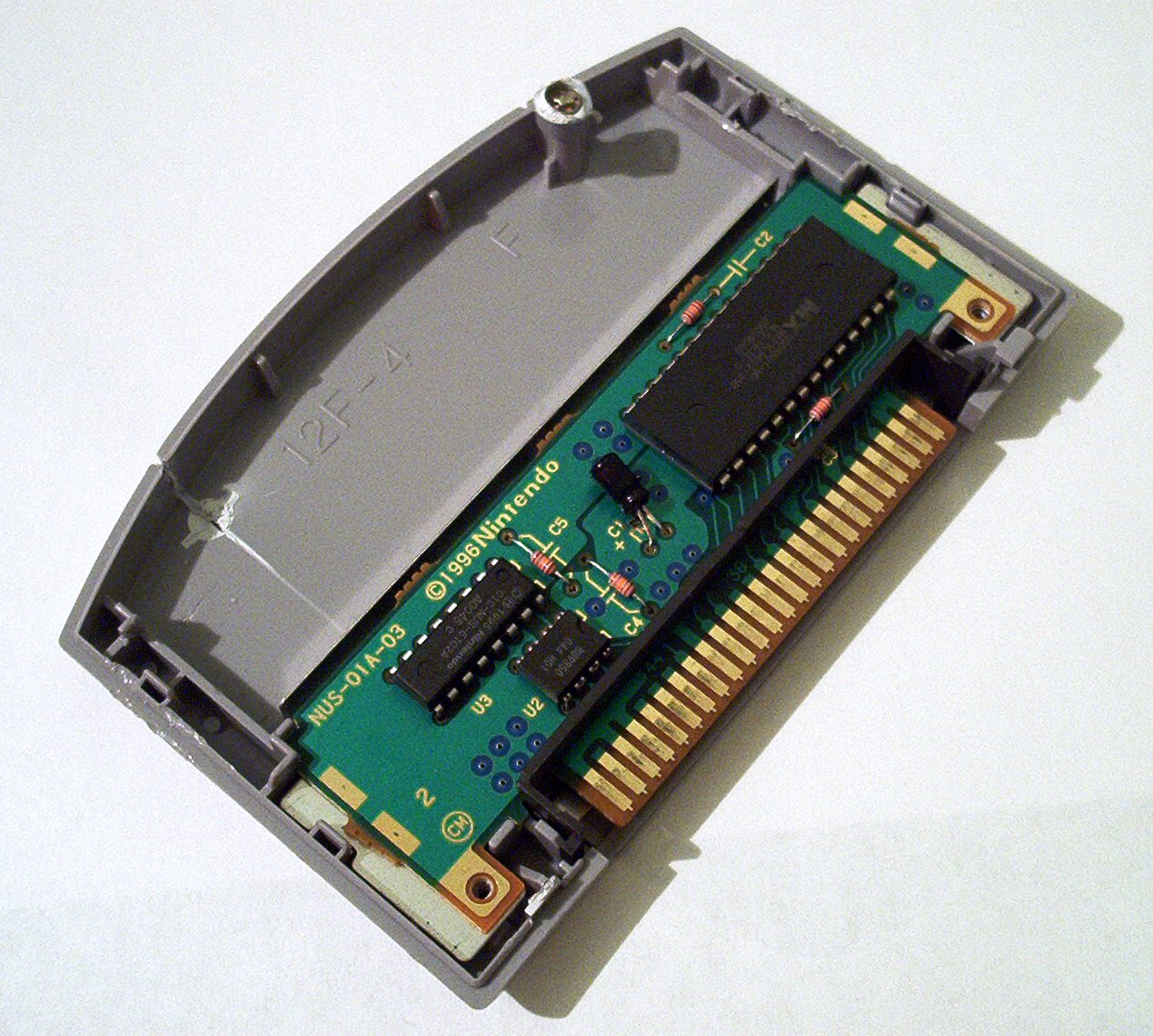
~The cartridge system is optimized for multiplayer games. While there were technical disadvantages in the form of small storage size, resulting in stretched, low-res textures (though this was offset by the N64's graphics chip, which was capable of trilinear filtering, making textures smooth). For multiplayer they were awesome. First, cartridges can't be scratched accidentally, and while there were issues (who's never needed to blow on a cartridge?), on the whole they were much more durable than pretty much any other media. They're also much faster, meaning almost zero loading times. Who wants to wait to start up some Smash Brothers or Goldeneye? Not me. Also, the small storage size is much more fitting for a simple multiplayer racing game or fighter rather than a single player epic with large levels or an expansive RPG.


~~Second, It's all in the games, Fu. Let's check out some real multiplayer gems: 


This game redefined the fighter and possibly multiplayer gameplay. The physics of the original stand out to me as being much better than its successors. There's not as many characters as the other games, but damn the original is hard to beat in sheer multiplayer fun. There was a ton of different modes, as well as the ability to fight on a team. The items were fun and varied. I don't think there's any gamer who can't give you a long and hilarious anecdote about a night filled with the original Smash Brothers.


As well as being genre-defining single player classics, Goldeneye and Perfect Dark had insanely fun multiplayer FPS action. Whether it's the satisfaction (or frustration) from blowing someone up with a proximity mine in the library in Goldeneye, or the shared sense of success that comes with ganging up to defeat that PerfectSim in Perfect Dark, both of these were solid contenders for hours of multiplayer fun.


The N64 really excels in racers, and Mario Kart 64 is no exception. Featuring a ton of new game modes as well as full 3d environments, four players, and a whole slew of changes that really solidified the franchise, Mario Kart 64 is a blast.


This game is a tad debatable, as it's primarily a single player game, but the multiplayer is certainly nothing to laugh at. Four players can duke it out in the Arwing aircraft, the Landmaster tank, or as a character on foot, with a bazooka. The single player is also really fun to watch, has a lot of replay value, and is pretty short. The levels are short enough to alternate between people. Not all games need to be the centerpiece of the party, and this is where Starfox 64 really excels.


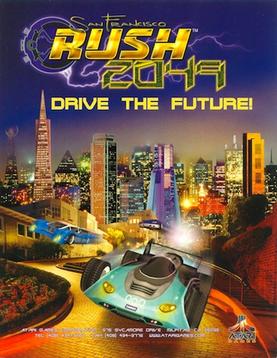
Futuristic rocket cars WITH WINGS? Check. Highly detailed futuristic version of San Francisco? Check. Awesome multiplayer race modes? Hellz yea check. Rush 2049, as well as enjoying great success in the arcades, had a whole slew of great ways to play in the home. One of my favorites was battle mode, which put you against up to 3 other players in a large map filled with tons of different weapons including rockets, lasers, gatling guns, and sonic blasters, which sent out a shockwave of sound that killed anything within a general area. There's also stunt mode, where players drive around a map filled with ramps, and use their wings to pull tricks and score points. The more insane the stunt, the more points received. There's a slew of customization options, parts and colors for every car. A racing game that really has a ton of great features for every type of racing fan.


~Pokemon Stadium: Sure now it's a little dated, but this game isn't any less fun. And don't forget all of the awesome pokemon-themed mini-games that can be played by up to four people. There's the Ratatat race, the Sandshrew dig competition, Ekans throwing, and a ton of other awesome fun games. The main battle is no multiplayer slouch either, enabling anyone to battle eachother's pokemon. Who doesn't love to see their pokemon battle in full 3D, with a huge crowd cheering them on and the announcers awesome cheesy lines: "Oh it's Charizard!" "But is it down and out!?" and straight from the game boy: "Critical hit! It's Super Effective" Nowadays everyone's got thier old red/blue cartridges lying around with all level 100 pokemon. Well put them to the test!


~Mario Party: A true party video game consisting of 50 mini-games. Mario Party is not only accessible to everyone, but really, really fun. It's led to 7 sequels, and for good reason. There's something for everyone in Mario Party. Be careful, though, the mini-games tend to be hard on your controller. That's mostly because people tend to get really into them.


~Destruction Derby 64: A greatly enhanced version of it's PlayStation counterpart, Destruction Derby 64 is, again, not your typical racer, there's a ton of game modes, including the unique "bomb tag." Bomb tag starts off with up to four players, and several NPCs. There's one "bomb" that can be passed from player to player by crashing into eachother. Hold on to the bomb to score points, but too long, and you'll explode. There's also straight, last-car-standing, destruction derby. And destruction races, where half of the players start at one side of the track, and the other half start at the other end. There's tons of awesome ways to have fun in this game.

There's just so many great multiplayer games out for the N64. I can't highlight all of them, so I'm going to list some more here. These are all N64 games with amazing multiplayer:

Ridge Racer 64
Jet Force Gemini
Worms Armegeddon
F-Zero X
WipeOut 64
Conker's Bad Fur Day
Gauntlet Legends
Wave Race 64
Excitebike 64
Quake 1
Quake 2
Duke Nukem 64
Duke Nukem Zero Hour
Hydro Thunder
Tony Hawk's Pro Skater 2
San Francisco Rush
Rush 2: Extreme Racing USA
Donkey Kong 64
Mortal Kombat 4
Mario Party 2
Star Wars Episode 1: Racer
Pokemon Stadium 2
Mario Party 3
Cruis'n World
Cruis'n Exotica

Hell. Of. A. List. All of these are truly awesome games. Along with some truly awesome PS1 favorites with graphical updates and new modes. There's also Gauntlet Legends, which is a hugely creative four player co-op action RPG. There's WipeOut 64, and the Quake series, which (while the graphics were better on the PC at the time) gives the N64 some great frag action. There's co-op Duke Nukem, the arcade favorite Hydro Thunder, crazy space racer F-Zero X. Jet Force Gemini allowed for third person combat with dogs and rockets, and Conkers Bad Fur Day's multiplayer was just as creative as the single player.

The N64 was by no means the perfect system, and there's a big multiplayer elephant in the room that I haven't talked about yet: Yes the Xbox 360 (also the PC, but I'm talking about consoles here). What with four player wireless controllers, internet connectivity, Guitar Hero, Rock Band, Halo 1-3, Left 4 Dead, Burnout Paradise, Rainbow Six Vegas, and a ton of other great features and games, it's sure giving the N64 a run for its money. Hell, even the Wii has a bunch of N64 games in the virtual console. Still, though, what the N64 did for multiplayer is still trying to be copied today. And certainly during its time, it was the cornerstone of every games party, and every living room that housed it.

WD TV HD Media Player: The Pirate's Media Center

0 comments
 
So, you've "acquired" digital media. Movies, music, pictures, TV. It's all in different formats and it's all stuck on your computer. How do you sit at home, break out the Doritos, and watch it on your TV? Well, you could drop $900+ on a Home Theater PC, or the cheaper option is to burn DVDs (assuming you have a DVD burner and player) which takes hours to do (encoding time, burning time, setup etc.).

But here's the thing. And the thing is called the Western Digital WD TV HD Media player. It's a little box (just over 6 inches long) with 2 USB ports, a composite TV out, an HDMI out, and a remote.

"But how do I use this thing to fix the issue you bring up?" you may ask. Well, it's simple: Plug any USB drive with media on it into the WD TV, plug the WD TV into your TV, and enjoy.

Yup, it's that friggin' simple, just plug in your external hard drive to the WD TV, and it plays the media on it. WD TV supports a ton of video formats, from .avi files encoded pretty much any way there is to HD .mkv files to .mpegs to .movs. It plays a ton of audio formats as well, including more obscure ones like .flac and .ogg, as well as your standard .gif, .jpeg, .bmp, .png image formats. Plus the firmware gets updated regularly with close ties to the community over at the WD TV Wiki.

It's also really portable, since the device itself is small, everything is truly plug and play, and all you'll have to lug around is your external media. Really, WD TV will accept pretty much anything that can be recognized as a "mass storage device" so even flash drives, SD cards and readers, or cameras can be used.

The kicker: this little box will set you back $100. Though I've seen it on sale at various times for around $70. Still, that's not too much considering I've personally found mine to be the most convenient way, not only to play my digital media on the TV, but to bring it with me everywhere.

Oh, and it's not like the device was designed to be used for pirated media. But hey, neither was Bit Torrent.

The interface is dead simple, and includes the ability to index the media on the drives connected to it, as well as simple file browsing. It's truly an awesome device.

WD TV.

WD TV at Newegg.

Cool Thing of the Week: Before You Know It

2 comments
So I have been posting much less frequently lately, and with good reason. For the past three weeks I've been attending Arabic summer school 3 hours a day, 4 days a week. And frankly, Arabic is hard. Now, I'm pretty good with grammar (I honestly never thought I would hear myself say that, but Arabic grammar is simpler than most Latin languages) but the thing that's killing me is vocabulary. And that's where BYKI steps in. BYKI can best be described as flashcards on crack. The program is divided into lists of vocab, which are taught to you in a three step process. 1) Overview of the words 2) Foreign-Native translation 3) Native Foreign translation For example, I picked at random the list "colors," as I had no clue what any of the colors are in Arabic. First the program walked me through the colors, then, it presented me with an Arabic word and asked me to say or think the English translation. When I had done so, I hit a button, the correct translation was shown and I was asked if I was right or not. When I began getting them all correct consistantly, the next step was for me to type in the English translation. Then, I was given the English and asked to say/think the Arabic, self reporting if I were correct or not. The final step was for me to type in the correct Arabic translation - the program brings up a virtual keyboard for non-English layouts. Frankly, it works marvelously. The real kicker here is typing in the foreign language - it really makes things stick in your brain. Also of note is that fact that every time a foreign word is show, they play a sound sample of a native speaker saying the word. The program comes with an impressive array of vocabulary - approximately 2000 words, an excellent start, plus the progam comes with the ability to create your own lists and import lists created by others. As an example, I have found several lists that were created for use with my textbook and they've been a tremendous help. So basically the program comes with about a years worth of vocab and the ability to expand upon it infinitely. Furthermore, the program is smart. It analyses which words you have trouble with, then makes sure to repeat these words often and under different circumstances - for example right after a word that is very similar, or similar meaning. One example from my studies, I misidentified the word for "writing" ad the word for "reading." BYKI then proceeded to alternate the words for "reading" and "writing" for the next 30 cards until I have those two words (and the differences between them) drummed into my head for all eternity. Basically, once the program says you've finished a list, you've actually learned it very well. (As a test, I went back to the colors list a few days later. I didn't make a single mistake.) BYKI also monitors how long its been since you last reviewed a list, and has such features as creating a refresher test from random words of lists you've finished, or alerting you when it's been awhile since you've covered a subject. All in all it's the most comprehensive and intelligent vocabulary program I've seen. Please note that this is a vocabulary and phrase oriented program, and as such it can only be a supplement to studying a language, not a replacement. You still need a good teacher to show you how the language works and teach you grammar, and Immersion is still by far the best way to attain fluency. BYKI just makes vocabulary acquisition far more pleasant and effective. If you're learning a language, I highly suggest you get the free version and try it out. Oh, and one final note - when you buy your software, you get to download an executable. There's no serial, no limited installs, no nothing. Just a single .EXE. It's wonderful. Also, I am a complete moron for forgetting to add: The software is pricey at $70, but there's a 20% discount through the end of this month if you use the following code at checkout: ond20off. $55 dollars is less than I paid for my Arabic textbook. Even if you don't buy it, you can use all the community lists at the website for free- you just don't get all the fancy tracking or the built in lists. So basically, BYKI has awesome free resources at their website, and even more available for less than a shitty console game. When you take into account the fact that the program will be useful up until the moment you're fluent in the language, it's a damn fine deal.

Impulse Deals

0 comments
So some of you might have heard of a little company called Stardock. Well, these folks have developed their own Steam-type app that doesn't require you to be logged in to play your games. It's interesting, and more importantly there's some pretty good deals on there. Far Cry 2 - $18 Assasin's Creed - $18 Galactic Civilizations 2: Ultimate - $40 Sid Meier's Pirates - $10 Civ III complete - $5 In my opinion, for buying singleplayer games Steam < Impulse < GOG; but Steam is better for multiplayer games due to its robust community features.

Firefox 3.5

1 comments
Is great. In particular, it's eliminated the nasty "freeze upon loading a new page" issue that plagues SSD devices (like my netbook.) I strongly suggest everyone give it a try.

The "Golden Age" of PC Gaming? O RLY?

5 comments
I was intrigued when I read about "The Golden age of PC Gaming" (which you should read, it's a good argument, and this post will make a lot more sense having read it. In fact, go read it now. It's OK, I'll wait). I hear a lot of people talk about this "era." They refer to their games from 1997 to 2002 as coming from a time of some sort of enlightened perfection, when graphics didn't need to be that shiny, developers were free to innovate, the average PC could actually run the games, new frontiers were being explored and new, innovative ideas flowed from every EB Games in town. And I agree, to some extent. There were a ton of classics and franchises that got thier start during this time, and some that are still being played to this day (Starcraft, The Sims, Quake 3). However, I'm gonna hafta go ahead and say, that's pretty much all just nostalgia banter.
First of all, PC gaming is what, 27 years old? And you're telling me we're already past our golden age? There's really no more innovation to look forward to? Jeez. Books have been around for thousands of years, and they don't even have a golden age. There was (again, arguably) a golden age of hollywood (1930-1948ish, longer for some), but that had to do with the industry figuring out how to make a ton of moola, and churning out some classics at the same time. Plus the whole depression and war thing, which drew a ton of more people to the movies. And people certainly didn't know it was a golden age only 6 years after it was over. It took a tad longer than that. There's also the issue of playability and ease of use. In this supposed, "golden age" the average joe could install and run most all PC games without a hitch, it was easy. This is true to some extent. Mostly because the Quake 3 engine was so awesome, and full 3D RTS games hadn't really come into play yet. But let's not pretend Windows was any less of an unstable mess than it is now. 98 was an improvement over 95, but still had its issues, and the early days of windows XP weren't so hot either. Oh right, and there was ME, good luck getting a game to run on that. Hell, even today I have issues running some of the old classics. Sure, games may have been less buggy back then, as it was more difficult to roll out patches without today's super-fast internets, so developers had to be more careful before releasing thier games. But a game is a program, and no program is bug-free. Every new game has its fair share of crashes. Besides, it really all depends on the developer/publisher. Buy a game from 2k, Valve, Stardock, Activision, or Codemasters and you're likely to have a less buggy experience than a game from EA, Ubisoft, THQ, or GSC game world. System requirements? Yea, they're tough nowadays, and some of them can get a little confusing for the average guy, but this is offset by digital distribution and automatic patching. You know how easy it is to install a game through Steam? Here's the steps: 1) Buy the game. 2) Wait for it to automatically download and install. 3) Play it. Want to keep all your non-steam games automatically patched and updated? Install Xfire and it does all the work for you. Don't know if a game will run on your computer? There's whole communities out there willing to help, along with simple services like this one. Besides, even the Quake 3 engine was pretty tough on systems when it first came out, but a couple years later, most everyone could run it well, and now we're starting to see many consumer PC's being able to run the Unreal 3 engine (and of course, there's Source).
These "golden age" lovers seem to think there's nothing good about PC gaming today. But C'mon. We're seeing some exiting stuff here. Rise of the indie game developer anyone? Games like Everyday Shooter, Braid, Audiosurf, World of Goo, Aquaria and Garry's Mod to name just a few, are all trying new things and innovating in exiting new ways. There's also small developers begginging to pick up speed. There's The Path, Penumbra, Mount & Blade, Painkiller, all amazing games, all made without millions of dollars, from independant developers. The PC gaming industry is evolving into something else, not something worse. Also, MMORPGs anyone? World of Warcraft will run on just about any computer or laptop around, and there's more than 11.5 million active monthly subscribers. There's also Age of Conan, Eve Online, and City of Heroes to name the big ones. MMORPGs completely reshaped the way we think of games, not to mention opening up new realms of developer/player relationships. They're awesome, they're innovative, and they're not from "the golden age." Even the days before "the golden age" were filled with inventive fun. Adventure games were done right back then. LucasArts' SCUMM engine ruled, with awesomely creative games like Monkey Island, Loom, and Day of the Tentacle. Along with Duke Nukem, Myst, Doom, Quake, Descent, and Civilization. All awesome breakthroughs in gameplay. Which brings me to another important point, the actual games. Let's take a look at some awesome PC titles that were released outside of "the golden age." This is a pretty long (though still very incomplete) list. I just kinda picked my loves, and the ones I know had industry and cultural impact, but there are likely other games out there that I'm missing. So first off, games released from 1990-1993: Sim City 2000 Loom The Secret of Monkey Island Monkey Island 2, Lechucks' Revenge Indiana Jones and the Fate of Atlantis Day of the Tentacle Sam and Max Hit the Road Civilization 1 Neverwinter Nights Alone in the Dark Dune 2 Star Control Star Control 2 Doom Myst Duke Nukem Duke Nukem 2
We got a lot of good shit here, SCUMM engine versions 4 to 6 are used for the previously mentioned Monkey Island and other great adventure games. Alone in the Dark started the entire survival horror genre. Myst became one of the best-selling games of all time. And if that's true, certainly it must have been easy enough to install. We have the first MMORPG too, Neverwinter Nights. Dune 2 pretty much solidified the RTS format. And The Civilization series started here, revolutionizing strategy games and becoming one of the biggest franchises out there today. Next, let's look at 1994-1996: Command and Conquer Civilization 2 Diablo Command and Conquer: Red Alert Descent Descent 2 Doom 2 Quake 1 System Shock 1 Warcraft 1 TIE Fighter The Dig X-COM: UFO Defense Jagged Alliance Warcraft 2 Duke Nukem 3D The Elder Scrolls 2: Daggerfall Tomb Raider MechWarrior 2
So we got the Duke, kickin' ass and chewing bubble gum in feaux 3D. X-COM refining the RTS to almost perfection. LucasArts still had it back then with The Dig and TIE Fighter. Warcraft saw its begginings here, as did Descent, Quake, Tomb Raider, Diablo, Command and Conquer, C&C: Red Alert, and System Shock. All awesome, all revolutionary, all before the "golden age." Now we're moving on to after the "golden age" where console-tards started tainting the ingenuity of developers, DRM became rampant and started ruining ease of installation, gameplay and creativity was sacrificed for shinies, which required more and more expensive hardware to run, oh, and all of these great games came out for PC. We'll start from 2003-2005: Half-Life 2 Civilization 4 Grand Theft Auto: San Andreas Far Cry Call of Duty 1 Grand Theft Auto: Vice City Wolfenstien: Enemy Territory Galactic Civilizations Painkiller Counter-Strike: Source Day of Defeat: Source Beyond Good and Evil Psychonauts Prince of Persia: The Sands of Time Darwinia Unreal Tournament 2004 Tom Clancy's Splinter Cell Rise of Nations Warcraft 3: The Frozen Throne World of Warcraft Max Payne 2: The Fall of Max Payne Star Wars: Knights of the Old Republic Homeworld 2
Geez what a list. First off, yes, I know some of these came out for consoles as well, but I was never talking about PC exclusive games. And hey, most titles from the "golden age" were on the consoles too, including Quake 3, Deus Ex, even The Sims. Plus you can't expect the industry not to shift over time, and here we began to see a lot of games released on multiple platforms. Anyway, the biggest one here is probably Half-Life 2, which is still regarded as the single greatest PC game ever. Far Cry is debatable, as it represents the rise of shinies replacing gameplay, but it did start the open-world FPS. Psychonauts was awesome, as was Beyond Good and Evil, some super-creative 3D platforming there. World of Warcraft is here, and we see a huge rise in the popularity of online games. Unreal Tournament 2004, Call of Duty, and Wolfenstien ET all had very large online communities that are still fairly strong today. Oh, and Counter Strike: Source is one of the most popular online action games of all time, played by both average joe and hardcore gamer alike. And finnally, 2006-Present: The Orange Box Bioshock Portal Call of Duty 4: Modern Warfare Team Fortress 2 Fallout 3 Grand Theft Auto 4 Left 4 Dead World in Conflict Galactic Civilizations 2 Race Driver: GRID Civilization 4: Beyond the Sword Half-Life 2: Episode 1 Half-life 2: Episode 2 The Elder Scrolls 4: Oblivion Flatout 2 Battlefield 2142 Sam and Max Season 1 Sins of a Solar Empire
Ok, yea, I named The Orange Box, as well as all of the games that are in The Orange Box, but Portal is amazing and deserves it's own love. As does TF2, and pretty much every game in The Orange Box. Also, the system requirements for The Orange Box? A Pentium 4 Processor, 1GB of RAM, and a DirectX 9 level graphics card. And those are the reccomended specs. How hard is it to install? Oh right, you get it through Steam. And game quality? Oh right, it's the freaking Orange Box. So, games today are crap are they? There's a ton of other games here that I will be playing years from now. Left 4 Dead is classic already, Co-Op is here to stay. Grand Theft Auto 4 was a cinematic achievement (despite it's admittedly shitty PC release). Call of Duty 4's multiplayer will stand out as unique, balanced, original, and fun as hell. World in Conflict gives us a new angle on the RTS genre. There's so many great, inspired games out today. Also, I didn't even mention all of the great amazing indie titles that have come out in the past couple of years. But to name a few: Light of Altair, And Yet It Moves, Crayon Physics Delux, The Path, Defcon, The Maw, Toribash, as well as the ones mentioned earlier. All of these games have great graphics, great gameplay, will run stable on pretty much anything, and they're fun as hell (admittedly I'm not through all of them yet, but I have yet to be dissapointed and you wont find a negative review out there). Also, they're exclusive to the PC, and most are available on Steam. So, I guess there you have it. Culture changes, industries change, technology changes, but there's always creative people out there making great video games. There are even those who think that now is the greatest time to be a gamer. And that, "If you can't find something to play -- something amazing -- you're just not looking." As video games in general rise in popularity, I see only a brighter, bigger future for PC games, where the hardcore gamer and average joe live in harmony, and new, exiting ideas are seen everywhere. The gaming generation is growing up, computers are more powerful and more portable than ever, and video games are more and more often seen as a valid artistic medium. All of this can only lead to good things. Boy, if I didn't know better, I'd say we're entering a golden age right now.

Song of the South

0 comments
Lordy, I have been nearly overcome with the amount of attention paid to my homeland in the videogame industry these past few weeks. First Valve announces that Left 4 Dead 2 is going to be set in the Deep South, with campaigns spanning Savannah to New Orleans, then I see that Bethesda's next DLC for Fallout 3 is going to be set in Point Lookout. I'm so happy about that I might forgive Bethesda for writing such shitty dialogue. Especially since you can get a coach gun. Wait... what's that you say? You can wear a War of Northern Aggresion relic?!? Instant win. I've always wanted to make a Lovecraftian survival horror game set in the Georgia marshlands. Maybe I'll actually get around to it one day. But until then, I'm going to be happy runnig around my ancestral stomping grounds blasting zombies to bits.

OH. EM. EF. GEE.

0 comments
November 17th cannot come soon enough.

Geeky/Random Web Clippings

0 comments
Apparently post frequency is the new theme here at The Tartar Sauce. Either that, or I've finally become bored with playing video games 24/7, yet still have nothing to do but update a blog. Anyway, here's some random shit from these here internets:

ZeFrank's Gyro.

Draw online, and share it with others.

Some clever advertising.

stomp-esque web short.

Midomi, a music search engine that lets you sing, hum, or tap the tune to find the music.

Screamin' Beans, if you click one thing here, click this.

Remember when the Zune was a big joke?

And finally, for Pat, a random Alias Generator.

It's Official, We're Official!

0 comments

Hey all! Big milestone here at The Tartar Sauce. I finally got around to getting us a domain with email and everything! So if you go to www.thetartarsauce.com, it should bring you right to our home page!

Don't feel left out if you're already subscribed to our feed or already have us bookmarked though, within a few days (it can take up to 3 days to fully switch over), any link from thetartarsauce.blogspot.com will redirect to our new domain, and until then the blogspot address should still be fully functional.

All of our writers now have fancy "name@thetartarsauce.com" email addresses, and our new site address that you can use to email us tips, complains, suggestions, or whatever is tips@thetartarsauce.com! Of course, our old one still works, but as soon as I get our contact sidebar info up, why would you use it?

We also have a parent company now (since a company was required when I signed up the domain), Spreadable Media, which, at this point, is only exiting to me since it doesn't really exist yet or affect anything.

Thanks for your support in making this possible, you awesome readers you. Let's hope this is the beginning of something great. Domains are the fucking shit!

Guest Writer Leonard Katzman On Piracy and Copyright: History and the Rights of the Public Domain

0 comments
The mental picture of pirates on the high seas, current events notwithstanding, brings to mind visions of centuries old battles and the taking of cold hard cash treasure. But, when you picture copyright piracy, that brings to mind visions of ......... well, to tell the truth it would be visions of centuries old battles. Copyright piracy is not remotely new. The argument over what’s yours, what’s mine and what’s ours has been around for centuries. This being The Tartar Sauce you might be asking, what does this have to do with music and video games or whatever? The answer is, everything. When you understand why we have copyright laws in the first place you then can form well-reasoned opinions about what today’s copyright laws should be. I can’t go into a long tome about copyright history because (1) I don’t have time, (2) there’s plenty of good sources on the web that cover it and (3) I don’t want to put anyone to sleep. So I’ll just touch on a few things and then get back to the present. One note of warning: if you go to a law library and look at one of the recognized treatises on copyright law you will find that they are massive multi-volume publications. Patry on Copyright (a great source) is eight very large looseleaf volumes and Nimmer on Copyright (the most widely cited source in court opinions) is eleven large looseleaf volumes. My point in saying this is that nothing I say here is complete. Copyright law is large and complex. To summarize the law is to misstate the law. Jake says his “views on music piracy aren't very simple”, and so they should not be. Copyright law is not simple. So, all the typical caveats should apply such as YMMV and IANAL (well actually I am but that’s not the point). Venture with me now, back about half a millennium. In the 1500s, Martin Luther complained bitterly about the problem of piracy. Many printers made a handsome living on pirate editions of Luther's writings. Interestingly, Martin Luther wasn’t that concerned about the loss of potential income. Instead, he was much more upset that the content of his writing wasn’t reproduced accurately and that his message ended up distorted. On the subject of printers ripping off his work, Luther said,
these misers and thievish pirate printers handle our work faithlessly. Because in their hunger for money they do not worry themselves about whether one of their pirated texts is correct or erroneous. Often have I had to experience that a pirated text is so incorrect that in several places I could not recognize my own work.
Imagine what Luther would think about Microsoft Songsmith. He worried that his ideas on scripture would be screwed up by careless printers. Not money, not economics, but the rights of authors to preserve the integrity of their work. There were others, however, who did complain about the money lost to authors. Jean Le Chapelier addressed the Paris Assembly on the subject in 1791. He said,
The most sacred, most personal of all the properties, is the work fruit of the thought of a writer [...] so it is extremely just that the men who cultivate the field of thought enjoy some fruits from their work, it is essential that during their life and a few years after their death, nobody can dispose of the product of their genius, without their consent.
So at least as far back as 1791 some folks disagreed with Jake’s position below that an artist’s work should enter the public domain upon their death. Le Chapelier thought the economic rights should last “a few years” after death. Of course, Le Chapelier had lots of unpopular ideas in the French revolutionary period, and Le Chapelier met a rather gruesome demise at the bottom of a guillotine. Championing author’s rights a century later was Victor Hugo. A prominent author in his own lifetime, Hugo was the founder and first president of the Association Littéraire et Artistique Internationale, an organization formed with the purpose of advocating for the establishment of fair laws to protect authors. Speaking of the status of things at the time, Hugo said,
Before the publication, the author has an undeniable and unlimited right. Think of a man like Dante, Molière, Shakespeare. Imagine him at the time when he has just finished a great work. His manuscript is there, in front of him; suppose that he gets the idea to throw it into the fire; nobody can stop him. Shakespeare can destroy Hamlet, Molière Tartufe, Dante the Hell.
But as soon as the work is published, the author is not any more the master. It is then that other persons seize it: call them what you will: human spirit, public domain, society. It is such persons who say: I am here; I take this work, I do with it what I believe I have to do, [...] I possess it, it is with me from now on.
Victor Hugo was recognizing that the rights of society, what copyright laws today call the public domain, arise as soon as authors publish their works. Exactly what that those public domain rights are, and where they must yield to the superior rights of the author, was the center of his debate and it led to the Berne Convention, an early and now widely adopted copyright law that protects the rights of authors. So, there are two distinct interests that these early thinkers identified: (1) The economic rights in a work, and (2) the rights of authors to preserve the creative integrity of their works, now more often referred to as “moral rights”. Here in the United States, the drafters of the Constitution held the prevailing English view at the time that economic rights are to be protected, but they didn’t concern themselves much with moral rights. The U.S. Constitution, drafted in 1787, grants to the Federal government the power to enact copyright laws. Article 1 Section 8 clause 8 of the states that congress, “shall have power [...] to promote the progress of science and useful arts, by securing for limited times to authors and inventors the exclusive right to their respective writings and discoveries.” James Madison, in the Federalist Papers, wrote to justify the position that copyright laws are good for society and that the states should let the Federal government have that power so there would be uniformity. He wrote,
The utility of this power will scarcely be questioned. The copyright of authors has been solemnly adjudged, in Great Britain, to be a right of common law. The right to useful inventions seems with equal reason to belong to the inventors. The public good fully coincides in both cases with the claims of individuals.
So in the USA copyright law started out with the purpose of protecting economic rights in order “to promote the progress of science and useful arts”. Congress enacted copyright laws many times since, with major enactments in 1790, 1831, 1909, and 1976. Then, in 1989, the United States became a signatory to the Berne Convention and thereby (mostly) also adopted a set of provisions that protected moral rights. My opinions on copyright law start with the assumption that at least some degree of economic rights and moral rights are valid and should be protected by law. We need those laws. I am not an anarchist. Authors need to earn a living, they deserve credit where it’s due, and they deserve to keep others from taking their work and botching it up without permission. On the other hand, the public has rights too. For example, just because Gene Roddenberry wrote cool stories about people making treks in star ships doesn’t mean no one else can write stories about star ships travels. Of course, you probably better not name the captain “Kirk” or “Picard” and have a “Vulcan” named “Spock”. That would be bad form, not to mention illegal. But, even the rights to those characters of his creation shouldn’t last forever. West Side Story is a deliberate retelling of Romeo and Juliet. Yet, Roddenberry makes a good example, because he is dead. It is the heirs of Roddenberry that own the Star Trek estate. Jake proposes that all copyrights should die with the author. Maybe that’s right. Maybe not. What if a young musician, trying to earn a living and raise a family, creates a popular song and is then tragically hit by a bus. Jake would have his family be out of luck. Sorry, the song is in the public domain now. I see it as reasonable and proper that the law provides financial incentive to authors to create their works. Speaking for myself, I’m not working to earn a living just for my own self, but for my family too. Frankly, speaking as a parent, it’s all about the next generation. I believe the right to control an author’s work should rightly last that author’s lifetime, and then to the heirs of the author for at least a little bit. Maybe twenty years. On the ridiculous side, the law now provides rights for the life of the author plus 70 years which I think most people who aren’t copyright owners would agree is too long. I like the guidance provided by Madison. Underlying copyright laws are the purposes which they are intended to serve. As set in the Constitution, those purposes are, “to promote the progress of science and useful arts.” If a law encourages people to create music, art, literature and so on, then that law is serving a rightful purpose and should be respected. But, if a law really bears no relation to encouraging those things, then the law is wrong and should be changed. My biggest gripe about copyright law is that the major copyright holders (Sony, Disney, Warner, etc.) spend more money on lobbyists in Washington than most people earn in their lifetimes. The result is that Congress continually grants more and more rights to copyright owners and leaves less and less rights to the public domain. The worst offender was the 1998 Sonny Bono Copyright Term Extension Act which extended the term of copyrights by 20 years. What was most offensive was that the extra 20 years was applied RETROACTIVELY, so that works which were due to expire were given a new life of 20 more years. No one has yet to recite a plausible argument how adding 20 years to the rights in a creative work done in fifty years ago in any way “promotes the progress of science and useful arts”. All that happened was a giveaway to the rich corporations who were upset that the early Mickey Mouse cartoons (or their songs or their books) were about to be public domain. In most cases, the original authors were long dead. The Supreme Court’s basic logic in upholding the extension even though it isn’t consonant with the Constitution’s purposes was no more complicated than, “well... Congress has done it before lots of times so we guess it’s OK to do it again.” So the law is the law, and you can argue all you want about “justification” (as Jake put it) for breaking the law. But if you get caught breaking the law, a court doesn’t look at the justification so much, just the letter of the law. Yet, Congress keeps protecting the rights of copyright holders without remembering there are counterbalancing rights held by the public domain. We should not be looking at “justifications”. We should be looking at the underlying purposes of copyright laws and deciding whether those purposes are well served. Then we should look at the underlying purposes for preserving public domain rights and decide whether those purposes are well served and well balanced against copyright owner’s rights. Most practitioners today argue that the pendulum has swung far too much in the direction of property owners. We can try to lobby Congress to be more understanding of the necessity of striking that balance. A host of great organization engage in that lobbying on our behalf, such as the American Library Association, the Center for Democracy and Technology, the Consumer Electronics Association, Consumers Union, the Electronic Frontier Foundation, the U.S. Public Interest Research Group, and many more. Let’s hope Congress is listening to us. I’m not all that optimistic. About the only area where the public’s rights have any strength is when copyright butts up against First Amendment free speech rights. Among other virtuous uses of the First Amendment, that’s how Weird Al makes a living. For a good outcome, a win for the little guy, see the wiki page on Golan v. Holder here: http://en.wikipedia.org/wiki/Golan_v._Ashcroft. Unfortunately, it is the courts that push back on copyright law to make way for free speech instead of Congress doing the right thing by drafting laws that are balanced. And I don’t expect this new President will help at all. I’m as much of an Obama fan as you can get and I still proudly sport my two Obama/Biden bumper stickers. But, on this topic, there have been some ominous signs. Obama has nominated to top Justice Department positions several people who have been the copyright industry’s lapdogs. He nominated Donald Verrilli for associate deputy attorney general. Verrilli is the lawyer who went after Grokster, brough a suit again Google on behalf of Viacom, and (horrors!) represents the RIAA! There are other RIAA types he has nominated too, see: http://news.cnet.com/8301-13578_3-10133425-38.html for example. As for Vice President Joe Biden, he was a steadfast RIAA and MPAA ally when he was in the Senate. Sorry to end on a down note, I see things only getting worse. Industry will lobby to get stronger and stronger protections and will continue to implement stronger (and lamer) DRM. Every time a movie ends up online prior to release the MPAA will shout bloody Armageddon to Congress. Every calendar quarter that CD sales are down the RIAA will plead to Congress that their industry is Doomed unless the evil downloaders are stopped. And all we have is the EFF and the Library Association saying, now now let’s be reasonable. Maybe that anarchy thing isn’t too bad an idea after all.
Leonard Katzman is an intellectual property attorney with focus on business counsel and transactions. He is the Director of Technology Commercialization at Brown University. When not concerning himself with intellectual property legal matters, Len likes to play acoustic and electric guitar. Currently, he is trying to master the ways of Logic Studio (a non-pirated copy of course).

New Writer, Japan, Piracy Week, Shifting, Awesomeness

1 comments
Yes, so you may have noticed we have a new contributor to The Tartar Sauce: The Great Bobbicus is here to share stuff and articles and things, seemingly about games and the like, should be interesting.

This is -believe it or not- unrelated to the fact that our very own Jake may not be posting as frequently anymore. He's gone 13 hours in the future to Nagoya, Japan, where, in between sake bombs and DDR sessions he now takes time to update his Posts from Nagoya blog/journal that is on our blogroll, and I reccomend you all read religiously (which is a little difficult to do when the blog has no RSS feed (*hint*)).

Also, in celebration/observation/mourning of The Pirate Bay trial verdict, starting Monday will be Piracy Week here at The Tartar Sauce! Featuring rants, tutorials, info, essays, and (as usual) anything else we think is interesting about everyone's favorite internet crime! This is the first time we've done something like this (and you've seen how "weekly" our weekly posts actually are), so forgive us if this goes a bit rusty, but it should be fun either way.

And don't be alarmed if you notice some of the layout shifting around and new elements popping up, that's just me fucking around, trying to add some new functionality to the sidebar/making the site look halfway presentable/getting angry at blogger for being a POS.

Finally, an awesome thanks to you all for reading, and giving us a decent amount of traffic.
It's... it's all I live for....