Showing posts with label rants. Show all posts

The Atlas of North American English

1 comments
This is something for all the language nerds out there. It's called the Atlas of North American English, and the coolest feature on it is a map of the United States and Canada that highlights different dialects of English. To view it, click on the link above, then click on "The Dialects of North America," then click "Mapping Features." On this map, North America (excluding Mexico, since it doesn't apply nearly as much, although it still could be interesting), is divided into regions based on the primary dialect spoken in that region. You can click on these regions and then listen to recordings of people from those regions speaking to actually hear these dialectic differences. It's a great way to waste time on the internet (although, admittedly, not everyone will enjoy it).
But there's one major issue I have with this map. Can anyone guess what it is after looking at the map? I'll give you a huge hint: I'm from California.
For some reason, the linguists who designed this map, two of whom are from Pennsylvania, gave New York City its own dialect but only assigned one dialect to THE ENTIRE WESTERN HALF OF THE UNITED STATES. I can tell you that people from Northern California speak differently than people from Southern California. Shit, people from some parts of LA speak differently than people from other parts of LA. Entire studies have been done on the dialects of California and it's a fact that AT LEAST four different dialects exist within California (anyone from there can tell you there are way more). But apparently that's bullshit; I didn't realize that everyone from the western half of the United States speaks exactly the same.
Not to make too big a deal out of it, even though I already am, but this map has a huge bias in favor of the east coast, which is annoying but not all that surprising. Probably the three best linguistics departments in the country (MIT, Harvard, and UMass) are in Massachusetts (which, as a linguistics student, I can say I'm proud to go to school in). But an affect of this is obviously that more attention is going to be paid to east coast dialects in the most prominent studies. And of course the reverse happens as well; the study I cited above was done at UC Santa Barbara, in California. It seems that people only pay attention to the dialects near them, which again makes sense if you think about it; they're the easiest ones to find native speakers for.
Also, I'm over-exaggerating a bit. If you actually listen to the recordings you'll hear tons of different dialects within every region. Still, that map is just a little lazy.

Belated Album Review: Easy Star's Lonely Hearts Dub Band (Also, why I don't like Sgt. Pepper's Lonely Hearts Club Band)

2 comments
No, this isn't a really really belated review of a Beatles album that I spelled the name of wrong. The album I'm reviewing was released a few months ago this year. It was produced by the Easy Star All Stars, who are known for other reggae cover albums, such as Dub Side of the Moon and Radiodread. I haven't listened to Dub Side of the Moon (a reggae version of Pink Floyd's Dark Side of the Moon) very much, but I own Radiodread (a reggae version of Radiohead's OK Computer), and to be honest I don't like it very much. The Toots & The Maytals cover of "Let Down" is absolutely incredible, better than the original in my opinion, but the rest of the album kind of falls flat, especially by comparison. To be fair, this is partly a matter of personal taste for me; I love old-school reggae that doesn't have lots of production, and most of the album, notably excluding "Let Down," is really production heavy. But I also think that there are other issues as well; for one thing, Radiohead's music doesn't always work as reggae. It was a noble effort for the All Stars to tackle the 3/4 time "Subterrainian Homesick Alien" using a genre that is almost always in 4/4 time, but the end result shows why reggae is almost always 4/4. It's kind of boring (well, so is the original song), and it just kind of sounds like, well, a reggae band trying to play a Radiohead song, rather than a reggae band making a Radiohead song completely their own. 
Anyway, tribute albums usually suck, so while I didn't particularly like Radiodread, I wasn't disappointed by it, since I didn't expect to like it in the first place. For that reason, I was pleasantly surprised by Lonely Hearts Dub Band. 
Now, just for a little background information, I don't like the album Sgt. Pepper's Lonely Hearts Club Band by the Beatles. I think it's one of the most overrated albums of all time, mainly because it's all over the fucking place musically. It's a concept album with no concept. The band starts out by introducing themselves as an imaginary band, which is a pretty cool idea, but then they just drop acid around track 3 and forget about the concept entirely. By the middle of the album they start introducing a magical kite and bastardizing Indian music and we have absolutely no idea what the fuck is going on. I've heard tons of hippie assholes tell me that the album's so cohesive, which is bullshit. We have a sitar song next to an old-timey woodwind ensemble one. How the fuck is that cohesive? I've also seriously heard people say "man, Sgt. Pepper is so great! It's got all the classics on it, like Strawberry Fields and Penny Lane." (Those songs are from Magical Mystery Tour, which is my favorite Beatles album, because it's cohesive and has all the classics on it.) And don't even give me that bullshit about how it's better when you're stoned, because all music is better when you're stoned. Why do you think dub music has an audience? Using that argument is like saying "Don't say McDonald's tastes bad, it's better when you're hungry." Of course Sgt. Pepper sounds incredible stoned, but an album that's actually good will sound even better! Sgt. Pepper is also proof that people don't necessarily make better music when they're on drugs. Frank Zappa did way cooler shit in the 60s, and he never smoked weed in his life. If Frank Zappa had done drugs, he probably wouldn't have recorded Uncle Meat and would have wrote something shitty like "Good Morning Good Morning" instead.
Anyway, I don't like the Sgt. Pepper album. If you want to read more about why it sucks, read this fantastic piece by Jim DeRogatis. Also, just to clarify, some bands, particularly They Might Be Giants, have made exquisite albums that have absolutely no musical consistency. They're a band who knows how to pull that off. The Beatles never were. That's why no one ever listens to the white album all the way through, and if you say that you don't skip "Revolution 9" you're a pretentious asshole.
Anyway, the fact that I don't like Sgt. Pepper probably made me like the reggae version of it way more, even though I love OK Computer and didn't really like its reggae version, which is strange, but also kind of makes sense. Since I love OK Computer, I didn't really want anyone messing with its songs (except of course for Toots & The Maytals. They can mess with any song they want as far as I'm concerned. Everything they touch turns to gold). On the flipside, I don't like Sgt. Pepper, so I like the fact that someone is actually making it's songs good. Now to be fair, the original album does have a lot of good songs on it... oh, wait, I checked the track listing, and it actually only has one really good song on it: "A Day In The Life," which, despite how I feel about the album, is my favorite Beatles song ("Eleanor Rigby" and "Happiness is a Warm Gun" round out my top 3. I guess I like all the morbid, depressing Beatles songs). But still, not all of the songs on the album are bad. Sure, "Within You Without You" goes on for way too long and is just George trying to recreate "Norwegian Wood" and "Love You To," the Beatles were on way too much acid when they wrote "For The Benefit of Mr. Kite," and "Good Morning Good Morning" just sounds like a cartoon exploding, but all of the other songs on the album are solid and just suffer from this lack of consistency. But the great thing is that Lonely Hearts Dub Band solves this easily. It's impossible for a reggae album to suffer from a lack of consistency. The only thing a reggae album can suffer from is too much consistency.
LHDB really shines because it makes the entire album consistent and really allows the actual songs to shine, rather than get covered up by bizarre, self-indulgent production. The other thing that's great about it is that it has fucking amazing guest artists on it. The track listing reads like a list of reggae all stars. We have The Mighty Diamonds, Max Romeo, Ranking Roger, Steel Pulse, U-Roy... shit, everyone on this album is fucking incredible. So now it's time for the song by song review process! (BTW, you can listen to the whole album on youtube, so I'll be providing links to each song.)
The first song essentially serves the same purpose as it does on the original album: just an introduction. It's not particularly exciting, but then again, this song never was the high point of the original album either (that might be another reason why the original suffers: it has a weak opener). The next track, Luciano covering "With A Little Help From My Friends," is a million times better than anything Ringo has ever done, including drumming for the Beatles (ok, I admit that was a little too harsh). The original version of this song just kind of lumbers along and has no passion in it, but Luciano's version manages to be both upbeat and mellow, and has terrific vocals.
Next we have "Lucy In The Sky With Diamonds," which I will henceforth be abbreviating as "LSD." I've thought for a while that LSD would make a great reggae cover; I always imagined it starting out with just a sick descending bassline and some phenomenal reggae singer doing the first verse over it, and then you'd hear a pickup of high-pitched snare drums before the chorus, which would be upbeat and full of sound. This version pretty much starts exactly how I imagined it, but I think the drums come in way to early. Still, it's pretty cool. Frankie Paul is great, especially when he changes the lyrics a little to include a reference to the Ethiopian flag (cellophane flowers of red gold and green...). Still, I think the song should speed up a little more at the chorus. But that minor complaint doesn't keep this from being an awesome cover.
"Getting Better" by the Mighty Diamonds is truly phenomenal - old school reggae style performed by old-school reggae greats. It incorporates the jagged guitar line and tight harmonies from the original Beatles song perfectly. "Fixing a Hole" is the "Let Down" of this album. Originally an average song, it's saved by an insanely talented singer, in this case Max Romeo. It's also odd how some of the lyrics to this song resemble the lyrics of Max Romeo's own songs. Basically, this is another nearly perfect one.
Next, we have "She's Leaving Home," the one which I was most nervous about. How are they gonna take a harp song in 3/4 time and make it reggae? Kristy Rock's answer? Go the completely opposite direction: make it upbeat in 4/4 time with prominent horns. No depressing song has ever made me want to dance this much. This is one of the highlights of the album, just because of how daring the arrangers were. In fact, the original was one of the most daring ones on the album, so in a way the reggae cover is appropriate.
I was also worried about "For The Benefit of Mr. Kite," but this one has Ranking Roger on it, and he can do no wrong. Mostly your typical reggae fare, but it's Ranking Roger, and the parts where he toasts are awesome. Plus the fact that they were able to make this bizarre, strange song typical is impressive.
Next... what the fuck... it's Matisyahu. Doing "Within You Without You." I never thought I could hate anything so much. It's about as bad as I expected it to be, and it's appropriate that they gave the most pretentious song to the most pretentious singer. But this kind of interrupts all the good vibes that the album had before. I don't like the strings, I don't like the sitar, I don't like the song, I don't like the fact that it's 5 minutes long, I don't like Matisyahu. This one's skippable. In fact, this one is inconsistent with the rest of the album, which is what I hated about the original.
The other thing which makes this song suffer as a reggae song is that, as Jim DeRogatis points out, the original version has no rhythm. One of the defining features of reggae is its rhythm. To take a song with no rhythm and turn it into reggae is really challenging, and I wouldn't expect anyone to pull that off. Especially Matisyahu.
Ah, the next one makes me feel better! "When I'm 64" is such a cheery song, perfect for reggae. Somehow, the original was too cheesy, but this cover just makes me happy! It's got a sick beat, a sick bassline, a sick melody, and that trombone just takes me back to my high school skanking days. I didn't even expect this one to work so well as reggae, but I think this is a case of the cover being better than the original. My only complaint is that Sugar Minott had a great opportunity with the line "doing the garden, digging the weeds," and he didn't do anything with it. Still, I really wish I had had the idea to turn this song into reggae when I was in a ska band.
"Lovely Rita" is another song that was made to be turned into reggae. It's upbeat, it's happy, it's in 4/4 time. But I think Bunny Rugs could have done a better job with this one. It should be a little faster, the drums should be a little bit more high pitched, the vocals should be a little less airy... but the fact that he invites Rita to get high with him is pretty awesome, and so is the trombone solo, although I wish that part were longer. The song picks up when he starts toasting. 
Next we have "Good Morning Good Morning," which I would say is the worst song on the original album (although there are some other really bad ones). If anyone could save it, it's Steel Pulse, a fucking incredible reggae band. And they do save it. Steel Pulse are another band that are just always solid. Seriously, just listen to that song, or watch any video of them live. If you're looking to get into any reggae other than Bob Marley's Legend album, Handsworth Revolution by Steel Pulse is a really good place to start (I'd also recommend the Trojan box set Originals and the soundtrack to The Harder They Come). Anyway, this song rocks. Steel Pulse rocks. 
The next one's a reprise of the first track? Who cares?
Actually, it's pretty sick. Give it a listen.
Finally, we have "A Day In The Life." As I said before, this one is my favorite Beatles song. You might think that because of this I wouldn't want it to be covered, but in fact this is another one that I've always thought would work great as reggae. To be honest, this version doesn't work as well as I expected. But this one's really just a matter of personal taste. As I said before, I'm more of a fan of older reggae, and this one's a bit more dubby. I always imagined the reggae version of this song (which I always imagined being called "A Dub In The Life") consisting of a main part that sounds more like the bridge of this version, and more of a ska rhythm on the bridge. But this one's still good. I just didn't like it as much partly because of personal taste, and partly because I love the original (which I guess also falls under the category of personal taste). Still good though.
Anyway, LHDB is a solid, solid album with lots of high points and only a few low points which really aren't very low. This is in contrast to the original, which is so all over the place that all of the points on the album are too far away for us to see their location. No offense to all the hippies out there, but I like this one better than the original. And I don't think that's really an insult to the Beatles. I think it's a complement to their songwriting abilities that their songs can so easily be played in other genres. As I kind of implied before, Sgt. Pepper is really an album that got bogged down by self-indulgent production. Most of its songs are good; it's just that on the original album we're not really allowed to actually listen to the songs. All we can listen to is the bizarre, random shit that was put on top of them. LHDB allows us to listen to what was going on underneath the sitars, woodwinds, echoes, and animal noises. It makes the album consistent, which compensates for its biggest weakness.
And in case anyone replies by saying that I can't understand the impact the album had when it came out (which you really aren't allowed to say unless you were there at the time), I've already prepared my response: Sgt. Pepper doesn't sound good now. It sounds like a relic of a time when people thought that bombarding our senses with absolutely no subtlety was a good idea. A classic album should be timeless. Sgt. Pepper isn't. It just sounds like it was made by a bunch of hippies with too much money.
(BTW thank you for reading the whole thing if you made it this far. I'm aware that this post was way too long).

Righteous Anger: "Food Inc."

0 comments
Before I begin, this is going to be a little rant-y and digressive and angry as far as reviews go, and I have a strong feeling that this reaction is exactly what the filmmakers wanted. But the question is, how to direct the anger? Make a big change and start buying local produce? Go after the agribusiness conglomerates? Go completely off the grid (as one friend is doing), as it were, living entirely vegan off of fruits and berries? I choose the other option, namely blogging about it for the internet to read, and then letting everyone make their own decisions after I've criticized their ways. I think a movie review is in order before the ranting begins. "Food Inc." is our subject for today, a documentary with heavy input from both Eric Schlosser and Michael Pollan and a tone somewhere in between. It's wide-reaching in its specifics, but the basic target is agribusiness and how our food has become so preposterously mechanized and industrialized. This takes on a merry cinematic assault on the various large corporations and their evils: inhumane conditions for animals, inhumane conditions for workers, putting chemicals into food, lack of sustainable farming practices, and a general deviation from all that is natural and good. Unfortunately, that's a lot of subjects for a single movie to hold, especially one that I remember clocked in at about ninety minutes. This leads to a kind of disjointed feeling in the otherwise logical presentation of arguments. However, the arguments are all pretty simple- by looking for cheaper and easier food, we've managed to tacitly induce a world in which agribusiness corporations milk us for our money in exchange for environmental aberrations and food that doesn't make us much healthier. A few of the segments are especially good, though, such as one in which the Monsanto corporation is exposed; they managed to patent a gene in soybeans (which, in addition to corn, make up the vast majority of our food, says the film) that made the soybeans resistant to pesticide. Because they patented a gene, they've made it so that if a farmer saves seeds from non-patented soybeans, the farmer can legally be charged with patent infringement. Evil shit right there. There's also the sad story of a young boy who died from e. coli as a result of agribusiness negligence, the standard tales of how we are breeding chickens and cows to grow unnaturally large, so large that they basically are grown like plants (because the poor animals can't walk or move on their own accord). And then the animals get to be mistreated on their way to slaughter, which takes place in all of eleven (I think it was eleven, in any rate some preposterously small number) slaughterhouses in the country. The bad guys largely remain faceless, except for some semi-morally ambiguous characters (a farmer perfectly content to make money off of unnatural chickens, Wall-Mart execs expanding into organic food), and the heroes are many: farmers fighting the power, being abused, or simply shaking their heads sadly about the decline of their noble profession. The best are one semi-nutty farmer in Virginia, who takes a rather gung-ho approach to growing the best food he can naturally and locally, and another farmer who sadly bemoans the state of soybean growing, but offers the closing words of hope in such a rousing manner that I couldn't help but be moved to cheer inside. But for all the heroes, stories, angering statistics and discussions with Eric and Michael, the film still doesn't offer much new advice. Basically we know it all: buy locally, read labels, learn what's in your food, and every one can make a difference. I guess after all that stored indignation I was prepared for more of a manifesto, a shared plan for the audiences to meet up and rebel, schematics for kidnapping money-grubbing execs, but instead it's just the same schtick that we grew up hearing. Anyways, my final judgment here is that this is a standard documentary, a little boring in some of the CGI infographics but with above-average interviews; while the end message is not new, it is still hopeful, which is important, and the powerful drive that the film arouses in viewers can definitely be put to a good use, so long as viewers aren't overwhelmed and fail to do anything. Review vastly too long and now over. Now, almost a week later, I don't have as much ranting and bile within me for the "how to change the world" proposed section of this post, so here's the short and sweet version: watching "Food, Inc," the obvious solution to me was the bleakest one: there are just way too many people on this planet for us to continue living in this way. And by "living in this way," I'd like to imply that there is a huge cultural aspect to the general world-is-ending problem, but specifically in the problem addressed by "Food, Inc." Basically, I see it boiling down to an American cultural desire and belief that everyone can achieve whatever they want, which is all fine and good until people start expecting to be able to eat whatever they want all the time, and cheaply. This leads to weird shit, like tomatoes in winter and fresh swordfish in the Midwest. Which would be fine if people wanted to pay the exorbitant costs of being able to eat what would be considered luxury food items in a natural world. But instead, agribusiness sees the opportunity to make a little cash and, using the power of capital to invest and coordination of transportation and all sorts of technology, manages to provide these food items (which should be considered artificially occurring) for a relatively cheap cost. Then lots of people buy them (because everyone wants to be able to do whatever they want whenever they want) and agribusiness gets very rich and can use this capital to keep on perpetuating the system. The people are happy because they can have sushi in North fucking Dakota and get food for vastly cheaper, freeing up more money to spend on useless shit like cable TV with nothing on and third cars and what have you. I'm starting to lose it here, but I hope you catch my drift. Main points: people want whatever they see everyone else having, especially the wealthy. They also want cheap things. Agribusiness uses their clout and all sorts of unnatural production and transportation measures (read bad for the planet) to provide what the people want for less. Then agribusiness profits while the people are contented, and the cycle perpetuates. Of course, that doesn't even begin to get at the problem in its entirety, because everything connects. In order to deal with this problem in its entirety, we'd have to solve for poverty, a way for people in large urban areas to get food directly from the farmers, a way for the price of good food to go down, a way to get people to listen, and oh my god my brain just short circuited from not being able to deal with this mess that we've managed to get ourselves into. A practical solution is for people to just realize, culturally, that if you live in the Northern hemisphere, you can eat tomatoes in the summer, and can preserve them for the rest of the year. Or that certain foods should be really expensive because of the energy that goes into producing them, like beef. Little things like that. I'm finding myself turning into a crotchety old man these days, and one of my favorite refrains is for a return to pre-industrialized revolution society, when there was no globalization and you only worked when there was work needing to be done. I realize it's an impractical ideal, and that there was mad plague back then, but there's something to be said for living a more natural lifestyle, one where we ate what was in season or around, and didn't haul food from all the corners of the globe to fill our ravenous western appetites. I think that if we can manage to think (as Michael Pollan says, bringing it all home) about where the food comes from, and realize that if certain foods don't make sense (like non-seasonal fruits and veggies), we probably shouldn't be eating them, then we'd be on a clear track to fixing this problem of food ceasing to be real food. And the impractical solution? Jack up the price of gas, vastly improve public/rail transportation, and bring back a village lifestyle to rural communities. People would have to focus on eating locally (too expensive to transport lots of food all over the goddamn place), and farming villages would be able to provide the food by rail to the major urban areas. Also, village life seems so cool. Go read "One Hundred Years of Solitude" and tell me that's not how we should all be living (minus the incest). And hopefully the pandemic won't come around just yet, because that will be nature's solution to this problem, reducing the number of motherfuckers on the planet demanding more food than they could possibly need, and eliminating the number of dudes out there who start blog posts and don't finish them for a week, thus forgetting everything they wanted to say and consequentially ranting aimlessly to the finish.

Reputable Sources: TechCrunch Fail

0 comments
So, I was browsing around these here internets, when I came across an article over at TechCrunch (read it). If you could call it that. It was 4 paragraphs long. The writer was complaining whining, saying that Firefox 3.5 kept crashing on him. He then assumes it's happening to everyone else, and then shit-talks Mozilla, saying they really need to fix this issue.
Wait, he doesn't really assume it's happening to everyone else before doing research and figuring out if it's true, right? Of course not, he writes for TechCrunch, so he's gotta be on his game. Right? Of course! So as proof, he posts this image, which shows six people over 2 days complaining of Firefox crashes. Six people in the entirety of Twitter.
He says Firefox crashes for him, "when I have too many tabs open (like 15 or 20, which is not unusual for me towards the end of the day)."
Erm, ok, lets see how many tabs I have open now .....47. Really? yea, proof, click and see:
Yup, I use around 40-50 tabs daily. Firefox has never crashed for me. But of course, that's not proof of Firefox's stability, it's just me. And I wouldn't generalize and rant about it on a reputable website for no reason.
And here's the kicker, straight from the article, "I’ve been patiently waiting for the crashing to stop as Mozilla releases patches and updates. And I’m on a developer build, so maybe I’m just asking for crashes."
Yes, yes you are. Why would you assume everyone else is having this issue when they're using a completely different browser. Nobody's really using the developer builds, especially not the people you cited as users of Firefox 3.5.
Geez, even 5 seconds of googling got me to this support page. I doubt the writer has tried any of these methods, but instead chooses to whine. He's most likely using some useless and memory hogging add-on that's causing it. Also notice the number of people who had the same problem: 69. 69 people reporting crashes for a browser with millions of users.
Honestly, though, this isn't what annoys me. If I got ticked off at every single guy whining on the internet about software, then I'd probably kill myself.
What annoys me so much is that this guy writes for freakin' TechCrunch, one of the hugest technology sites out there. These guys are supposed to know shit, and have some sort of professionalism, and they're supposed to be reputable. But then why the fuck is this guy whining about his own bullshit on the main page?
Honestly, I have a lot less respect for TechCrunch. It depresses me that they can get away with this and still be seen as trustworthy. I dunno, I've always been more of an Ars guy anyway.

Web Clips for 7/27/09

0 comments
Bill Maher talking about stuff that matters. I try to stay away from politics as much as I can, but this issue just pisses me off. AT&T IS BLOCKING 4CHAN! I don't care if it's the most disgusting and offensive place on the planet, as a member of an uncensored internet I should have the right to look at whatever the fuck I want. I'm not a user of /b/ and the like, but I hope there's a huge retaliation from 4chan for this one. This is bullshit. You've heard about the silent protest, but what about the invisible one? Your facial hair, people will judge it.

George Lucas is a Prick

2 comments
First of all, I like Star Wars. I don't love it. I grew up with it and I think it's a wonderfully deep universe (and lightsabers are badass, of course.) I didn't dress up and go to the premier of the new prequels, and I really wasn't all that upset when they sucked (yes, they sucked. No, it's not nostalgia talking.) I thought some of the tweaks he made in his Special Edition release were cool, and some were retarded (like Han not shooting first) but I didn't take it personally, like many fanboys seem to have. But man, George Lucas is a prick. Really, he is. He refuses to release a high-quality version of the original trilogy, instead mandating that the 1997 Special Edition has "replaced" it. According to Lucas, this version truly represents his original vision. Currently, the highest quality copy of the original theatrical release that one can obtain is from the 2006 DVD release, which contains a laserdisc transfer. So it's decent, but not fantastic. I'll let the man speak for himself: "...So what ends up being important in my mind is what the DVD version is going to look like, because that's what everybody is going to remember. The other versions will disappear. Even the 35 million tapes of Star Wars out there won't last more than 30 or 40 years. A hundred years from now, the only version of the movie that anyone will remember will be the DVD version [of the Special Edition], and you'll be able to project it on a 20' by 40' screen with perfect quality. I think it's the director's prerogative, not the studio's to go back and reinvent a movie." First of all, George Lucas only directed the original movie - Irvin Kershner directed Empire and Richard Marquand directed Return of the Jedi. So by doing his best to have the originals fade out of existence, George Lucas is exploiting his legal ownership to wipe out their vision. I think we can all agree that deliberating destroying another person's art is dick behaviour, yes? Second, it's not like anyone's saying that Lucas can't go back ad change his movies to his heart's content. Plenty of directors do that. It's called a "Director's Cut" for a reason. Lucas is trying to pretend like the original theatrical never existed. Which it did. Lots of people saw it. Third, George has been adamant that the original release represented only "25-30% of his vision." Yet what is added in the Special Editions? Some CGI doodads, some character assasination, and replace some actors with wooden planks to aid continuity with the prequels. The story arc is the same, the characters are (mostly) the same, the dialogue is slightly shittier, but overall, his vision isn't that different. Fourth, The special edition is not what was released in 1977. It wasn't the Special Edition that catapaulted Lucas to fame, bringing him untold wealth and the power. It's not the Special Edition that has affected a generation and inspired such rabid fandom. As much as Lucas wishes it weren't so, it's the original release that made cinematic history, and his recut is barely a footnote. "It’s like this is the movie I wanted it to be, and I’m sorry you saw half a completed film and fell in love with it. But I want it to be the way I want it to be." Well, it's not, to be honest. When people talk about the impact that Star Wars had on film making, they're talking about the original. Trying to say "no, no, THIS is what everyone was talking about!" is absurd. Even if the Special Editions were better movies, the originals would still be more important, historically. There's a story about a University that was doing a "history of cinema" film festival, and they wanted to show Star Wars because of its major impact. So they asked LucasArts for permission to screen the original theatrical release. LucasArt's response? Festival: Hello, we are doing a "History of Cinema" festival, and we would like to screen the original Uncut Theatrical Release of Star Wars in order to commemorate it's massive impact on film and film making. LucasFilm: Certainly, we would be happy to rent you the 1997 Special Edition release. Festival: No, no, no, I don't think you understand - we want to show the original movie that was such a cultural milestone. LucasFilm: Yes, we understand, and for all intents and purposes the Special Edition is the original film, the way George Lucas wanted it to be. Festival: So the movie that changed the world of cinema in 1977 was released in 1997? LucasFilm: *muffled sounds* Festival: What was that? LucasFilm: Sorry, that was George Lucas' penis in my mouth. He comes by every day about this time. As for your question - yes, that's correct. So yeah, I'm a little pissed that George Lucas, sitting on top of the most advanced film making studio ever and possessing a pile of money that would make Scrooge McDuck -or whatever the hell his name is- envious, won't create a high-quality release of the very movies which brought him such fame and power. It would be nice to have, but more importantly, George is trying to re-write cinematic history to appease his own control fetish (having already indulged his incest and pedophilia fetish several times.) And the scary part is that he's succeeding. So to sum up: George Lucas is deliberately attempting to destroy a piece of cinematic history in order to appease his own ego. George Lucas is a prick.

Nintendo 64: The Best Multiplayer Console?

2 comments

So, full disclosure, I've only ever personally owned two video game consoles: one was the Sega Master System II (which maybe I'll talk about later), and the other was the Nintendo 64. I personally haven't felt the need to invest in any other console since. But unfortunately, last year all of my games and controllers for my N64 were stolen (bummer right?) and I've been unable to play my precious since.


But this summer I've been going through the process of re-buying my peripherals and library of games (and probably picking up a few new ones), because I will be providing the N64 goodness in the living room of an on-campus house come fall semester (which I'm mad exited about). Though I'm not here to ramble on about the N64 being the best console ever (I would never make a claim like that, because it's basically all personal preference/ dependent on the games). Though I do think each console has its strengths and weaknesses, and where the N64 really shines, is multiplayer. Here's why:


~~First off, the hardware, It's designed to work well with multiple people:

~There's four plugs for controllers by default, which is way more convenient than the PS1/2 or any predecessor. Sure, you could buy an adapter, but it's just much more convenient to have four player capability from the get-go. It also means that most games had four player multiplayer support, and developers spent more time refining the multiplayer component.


~The controllers, while a little odd, were pretty damn durable (unless you played a lot of mario party), easy to clean after nights of Mario and Pizza, and introduced some great innovations like joysticks, trigger buttons, and expansion slots. The controller ports also were secure enough, but popped out easily with a good yank, meaning the N64 was immune to overly exited moments, and tripping over the wire wouldn't send the console flying off of the shelf.


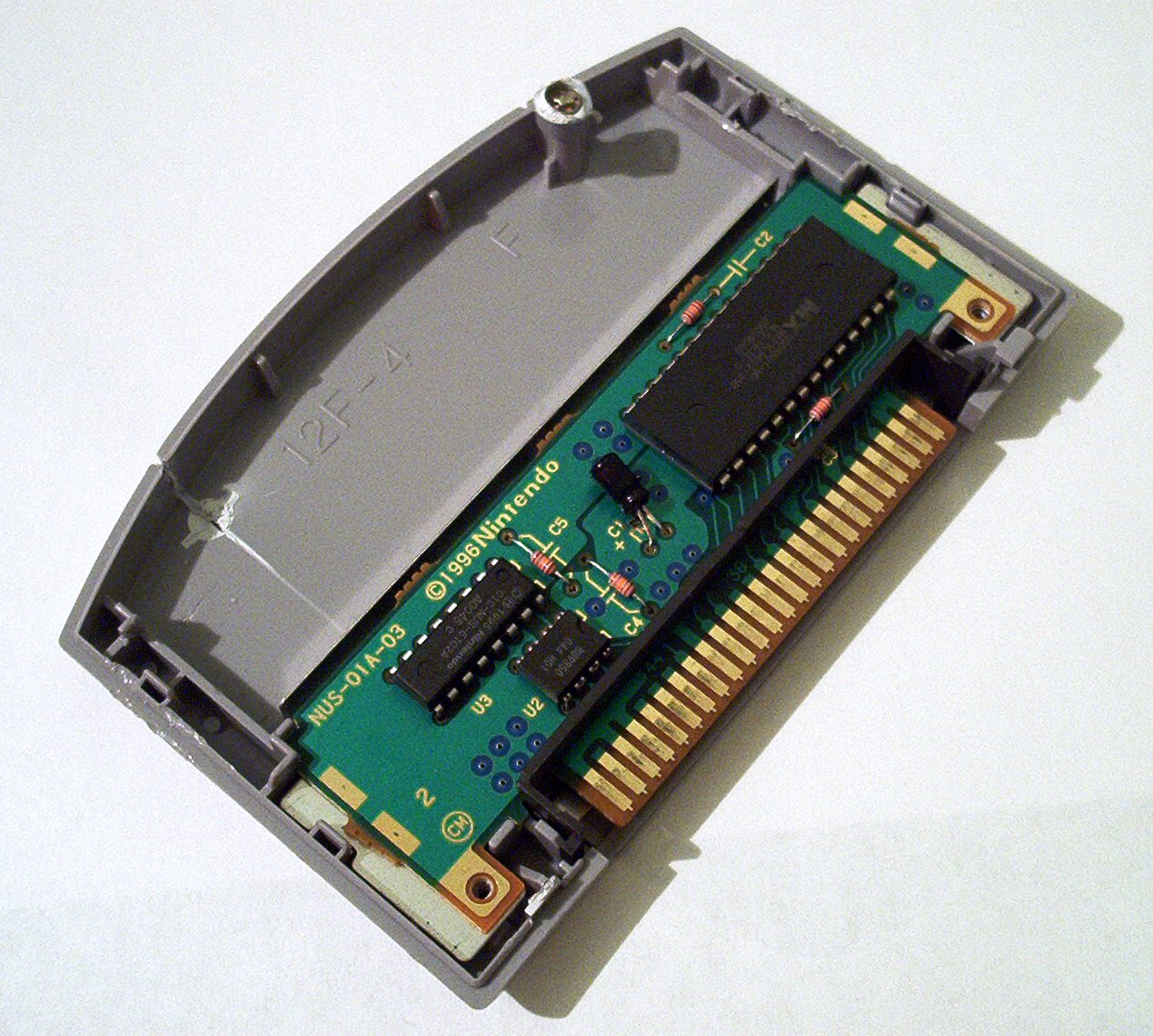
~The cartridge system is optimized for multiplayer games. While there were technical disadvantages in the form of small storage size, resulting in stretched, low-res textures (though this was offset by the N64's graphics chip, which was capable of trilinear filtering, making textures smooth). For multiplayer they were awesome. First, cartridges can't be scratched accidentally, and while there were issues (who's never needed to blow on a cartridge?), on the whole they were much more durable than pretty much any other media. They're also much faster, meaning almost zero loading times. Who wants to wait to start up some Smash Brothers or Goldeneye? Not me. Also, the small storage size is much more fitting for a simple multiplayer racing game or fighter rather than a single player epic with large levels or an expansive RPG.


~~Second, It's all in the games, Fu. Let's check out some real multiplayer gems: 


This game redefined the fighter and possibly multiplayer gameplay. The physics of the original stand out to me as being much better than its successors. There's not as many characters as the other games, but damn the original is hard to beat in sheer multiplayer fun. There was a ton of different modes, as well as the ability to fight on a team. The items were fun and varied. I don't think there's any gamer who can't give you a long and hilarious anecdote about a night filled with the original Smash Brothers.


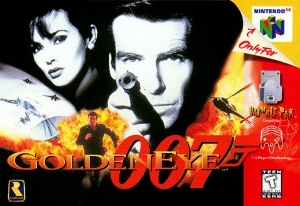
As well as being genre-defining single player classics, Goldeneye and Perfect Dark had insanely fun multiplayer FPS action. Whether it's the satisfaction (or frustration) from blowing someone up with a proximity mine in the library in Goldeneye, or the shared sense of success that comes with ganging up to defeat that PerfectSim in Perfect Dark, both of these were solid contenders for hours of multiplayer fun.


The N64 really excels in racers, and Mario Kart 64 is no exception. Featuring a ton of new game modes as well as full 3d environments, four players, and a whole slew of changes that really solidified the franchise, Mario Kart 64 is a blast.


This game is a tad debatable, as it's primarily a single player game, but the multiplayer is certainly nothing to laugh at. Four players can duke it out in the Arwing aircraft, the Landmaster tank, or as a character on foot, with a bazooka. The single player is also really fun to watch, has a lot of replay value, and is pretty short. The levels are short enough to alternate between people. Not all games need to be the centerpiece of the party, and this is where Starfox 64 really excels.


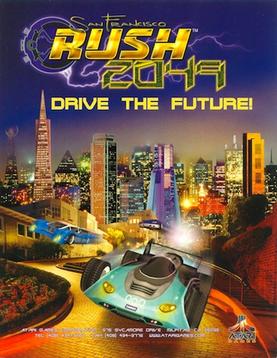
Futuristic rocket cars WITH WINGS? Check. Highly detailed futuristic version of San Francisco? Check. Awesome multiplayer race modes? Hellz yea check. Rush 2049, as well as enjoying great success in the arcades, had a whole slew of great ways to play in the home. One of my favorites was battle mode, which put you against up to 3 other players in a large map filled with tons of different weapons including rockets, lasers, gatling guns, and sonic blasters, which sent out a shockwave of sound that killed anything within a general area. There's also stunt mode, where players drive around a map filled with ramps, and use their wings to pull tricks and score points. The more insane the stunt, the more points received. There's a slew of customization options, parts and colors for every car. A racing game that really has a ton of great features for every type of racing fan.


~Pokemon Stadium: Sure now it's a little dated, but this game isn't any less fun. And don't forget all of the awesome pokemon-themed mini-games that can be played by up to four people. There's the Ratatat race, the Sandshrew dig competition, Ekans throwing, and a ton of other awesome fun games. The main battle is no multiplayer slouch either, enabling anyone to battle eachother's pokemon. Who doesn't love to see their pokemon battle in full 3D, with a huge crowd cheering them on and the announcers awesome cheesy lines: "Oh it's Charizard!" "But is it down and out!?" and straight from the game boy: "Critical hit! It's Super Effective" Nowadays everyone's got thier old red/blue cartridges lying around with all level 100 pokemon. Well put them to the test!


~Mario Party: A true party video game consisting of 50 mini-games. Mario Party is not only accessible to everyone, but really, really fun. It's led to 7 sequels, and for good reason. There's something for everyone in Mario Party. Be careful, though, the mini-games tend to be hard on your controller. That's mostly because people tend to get really into them.


~Destruction Derby 64: A greatly enhanced version of it's PlayStation counterpart, Destruction Derby 64 is, again, not your typical racer, there's a ton of game modes, including the unique "bomb tag." Bomb tag starts off with up to four players, and several NPCs. There's one "bomb" that can be passed from player to player by crashing into eachother. Hold on to the bomb to score points, but too long, and you'll explode. There's also straight, last-car-standing, destruction derby. And destruction races, where half of the players start at one side of the track, and the other half start at the other end. There's tons of awesome ways to have fun in this game.

There's just so many great multiplayer games out for the N64. I can't highlight all of them, so I'm going to list some more here. These are all N64 games with amazing multiplayer:

Ridge Racer 64
Jet Force Gemini
Worms Armegeddon
F-Zero X
WipeOut 64
Conker's Bad Fur Day
Gauntlet Legends
Wave Race 64
Excitebike 64
Quake 1
Quake 2
Duke Nukem 64
Duke Nukem Zero Hour
Hydro Thunder
Tony Hawk's Pro Skater 2
San Francisco Rush
Rush 2: Extreme Racing USA
Donkey Kong 64
Mortal Kombat 4
Mario Party 2
Star Wars Episode 1: Racer
Pokemon Stadium 2
Mario Party 3
Cruis'n World
Cruis'n Exotica

Hell. Of. A. List. All of these are truly awesome games. Along with some truly awesome PS1 favorites with graphical updates and new modes. There's also Gauntlet Legends, which is a hugely creative four player co-op action RPG. There's WipeOut 64, and the Quake series, which (while the graphics were better on the PC at the time) gives the N64 some great frag action. There's co-op Duke Nukem, the arcade favorite Hydro Thunder, crazy space racer F-Zero X. Jet Force Gemini allowed for third person combat with dogs and rockets, and Conkers Bad Fur Day's multiplayer was just as creative as the single player.

The N64 was by no means the perfect system, and there's a big multiplayer elephant in the room that I haven't talked about yet: Yes the Xbox 360 (also the PC, but I'm talking about consoles here). What with four player wireless controllers, internet connectivity, Guitar Hero, Rock Band, Halo 1-3, Left 4 Dead, Burnout Paradise, Rainbow Six Vegas, and a ton of other great features and games, it's sure giving the N64 a run for its money. Hell, even the Wii has a bunch of N64 games in the virtual console. Still, though, what the N64 did for multiplayer is still trying to be copied today. And certainly during its time, it was the cornerstone of every games party, and every living room that housed it.

Yet Another Sandbox Title: A Review of Prototype

2 comments
Ugh, I thought I'd never write a review here, it's not like there isn't enough already out there, and no one comes here for reviews, so anything I write about games I tend to try to stay away from just reviewing them, but everything I started writing about this game just turned into a review - or something close enough to a review that it might as well be a review anyway. Anyway:
Ok, Prototype is an "open world" game, which means an inevitable comparison to the Grand Theft Auto series. So here it is: Prototype is like GTA, except you're an unstoppable killing machine, and the zombie apocalypse is involved.
Sound interesting? Triple-A titles tend to do that. Oh yea, this is a big title:
I'm a huge GTA fan and a huge open world fan. I love open world games because they're stress-free. If you don't want to worry about a story, you don't have to. You can just drive around, doing jack shit, playing around with guns and explosions without any motivation to do anything. It's great, and I spend hours doing just that. It's actually rare that I finish the storyline of any given sandbox title.
My latest sandbox game that I'd been sinking countless hours into was GTA 4. Though, it kept pissing me off. You see, I kept longing for the days of GTA 3 and Vice City, where jumping off of the tallest building wouldn't kill you, the cops couldn't take three shotgun blasts to the chest and still shoot, there were tanks, helicopters with missiles, rampage mini-games, and the main character actually wore their seat belt.
I was also sick of the wonky controls. Too often I would try to climb up to a ledge, but instead would vault over it and fall 50 feet to my death. Cuz that's what I wanted. Or I'd be firing an RPG on top of a building, but the game decided that I wasn't actually aiming at the FBI agent below, but the ledge at my feet, and I'd have to watch myself get blown to bits in slow motion. This happened in the earlier games as well, but it wouldn't kill you, so you could do the health cheat afterwards and go back to killing. Sure, the graphics in GTA 4 are better, but hey, the developers name is Rockstar, not Glam Rockstar.
Um, anyway, imagine my delight when I found a game where the main character not only is completely unaffected by gravity, but is also mostly unaffected by explosions. Though he could probably lose the overly-angsty hoody and popped collar.
You are Alex Mercer, a guy who wakes up in a morgue having lost his memory, but gained ridiculous super-powers. Which I would say is a pretty decent trade off. He goes on a hunt to try to uncover why he is the way he is, and kill the people responsible not only for doing this to him, but also for releasing a virus on Manhattan that turns the city into zombies. Or something like that. The story's actually not too bad if you're into the whole "governments are evil" thing. It's told fairly well, cutscenes aren't painful, and voice acting is decent. It's not Deus Ex good, but maybe it's Deus Ex 2.
Though, like Painkiller, It's not really the story that's important. What's important is that you can tear an innocent civilian in two with your bear hands, and absorb their body for health. Your power is basically you can alter yourself at a genetic level, and turn your arms into claws, a giant blade, Hulk fists, a whip thingy, and a giant shield. You can sprout spikes from the ground, shoot tendrils from your palms, and morph into anyone you absorb. There's an absolutely huge list of powers and moves you can buy with experience points (called "evolution points" in the game, which is pretty lame) that you obtain for doing pretty much anything.
In this way it's almost like an RPG, you can choose what powers you'd like to upgrade and taylor them to your playstyle. It's actually what kept me playing the game, because I knew if I finished just one more level I'd get acces to a new ability.
Actually, I'm sick of telling you what the game is about, go read (or skim) the Wikipedia, and Metacritic entries for the game. Good? Ok, moving on.
First, huge props to the devs for the PC version. I was very pleased. There was no apparent DRM of any kind, except for a CD check. The install was simple and went on without a hitch, there was automatic gamepad support, as well as keyboard support, which I know sounds weird, but it's outrageous how many games I play on the PC where, during a tutorial, the game will say something like "Press [Left Trigger] to aim." and I have to open up controls to see what they're talking about. But none of that here. The game also ran exceptionally well on my middle-of-the-road system (and man, it pains me to say that, since just two years ago it was top-of-the-line. Damn you moore's law). I was able to crank up all the shinies (even vsync and AA) and run it at my native resolution of 1680x1050. The game ran smooth and never crashed, which is saying a lot for a 1.0 release. It's really great to see a game that is actually a final product, and not a buggy POS that needs 3 or so patches before it's even remotely playable (here's looking at you, S.T.A.L.K.E.R). The graphics themselves are not really that great, They look almost last-gen with higher res textures, which is unusual for a big title. The game still looks damn good, though. And again, it's not about the graphics as much as it is about killing people. Plus a lot of effort was put into the animations. Everything is very fluid and killing people is very, very satisfying. Most people say that you really should use a gamepad for this game. I used both, and found that I actually liked the keyboard and mouse better. It all comes down to personal preference, but if you're worried about it then I can say it was definitely a better experience with the keyboard and mouse, as the difficult combos and such are simply easier when there's more buttons. Ok, so moving on to that actual game. It starts off really great, once you get past the tutorial levels. But as the story progresses and things move on, the game actually gets significantly worse, for a variety of reasons: 1.) The more powers, abilities, and attacks you gain. The more difficult it becomes to control your character, so what used to be a simple jump or climb, is now a quadruple flip into a glide attack that destroys a city block. It makes simple things like grabbing people (which becomes more and more important) very troublesome. There were many times where I'd try to pick up a gun next to me, but instead would blow up a tank across the street with ground spikes, sending the entire military after me. 2.) The difficulty curve, while somewhat linear, is kinda cheap. So you took out 50 soldiers in the last level? How about 100? You thought 7 tanks and 3 helicopters was easy? Well how about 14 tanks and 6 helicopters? It makes things much more chaotic than they need to be, and combined with reason #1, becomes extremely frustrating and predictable. 3.) The boss battles suffer from the same problem as the difficulty curve, but also, they're FUCKING RIDICULOUS! But not in a good way. Not in the epic way. I remember one of the major boss battles (spoiler) where you fight a main character, Elizabeth Greene, who is literally a giant puffy vagina on a stick. I timed it, and it took me 45 FUCKING minutes to beat her, and I didn't die once. That's just too long. She had so much heath that it just becomes annoying. Here is a 2 part video of a guy doing it in 15ish minutes (which is still a long-ass time for a boss battle), though he has upgrades which you don't have in that portion of that game yet, and has obviously fought her before: Notice she has 4 HUGE HEALTH BARS! WHY ON GODS GREEN EARTH WOULD YOU DO THAT! She spits rocks at you, shoots heat-seeking green energy thingys, sends hunters at you (which are sort of like the zombie equivalent of tanks) as well as a ton of other attacks, and zombies, and the military is also fighting you with everything they have. It's as if the developers realized that they'd made your character too powerful, and tried to compensate. The last boss battle is also stupidly difficult, though a little less absurd. 4.) The missions are rerepepetititivtivee as fuck. Here's the objectives for one of the missions near the end of the game: 1~ Destroy a helicopter before it leaves the area. 2~ Destroy two helicopters before they leave the area. 3~ Destroy three helicopters before they leave the area. 4~ ok, I'm not telling you this one. See if you can guess. That's right, FOUR HELICOPTERS! YAY! AWESOME GAYME DEZINE GUYZZZ! 5.) Free-roam gets less and less appealing as you progress through the game. There is a zombie infection slowly spreading through the city, and while it IS cool to free-roam around a zombie apocalypse for a while, it is a novelty that quickly wears off and I ended up yearning for the ability to explore just plain-old Manhattan. The game makes up for it with the ability to, once you've finished the story, start a new game with all of your existing powers retained. which is cool, but at the beginning you lack the ability to hijack choppers and tanks, which again makes free-roaming not as fun as it could be. 6.) The targeting system is abysmal, and again gets more annoying the more enemies there are and the more chaotic the missions get. So often I'd try to aim at the giant boss charging at me, but the targeting system would decide that it was more important to focus my wrath upon the taxi behind me. All in all though, a whole lot is forgivable when you go back to the fact that you can run through cars and crowds of people with a giant bio-blade. Free-roaming is still a real blast. And not all of the missions are a total bust. Did I mention the bio-blade?
The stealth aspect is actually really well done. It's pretty simple, the devs weren't really out to try anything new and wonky, but what's there is solid and it works. basically one of your powers is the ability to morph into other characters. So to infiltrate a base, you'll consume and morph into a general, then just walk in. It's pretty cool, and you can escape the military this way in free-roam. There's also the affectionately named "patsy" ability, where you accuse others of being you in disguise, and get to watch the other soldiers hesitate, then open fire. It's great. So, overall, this isn't a game that's going to stand the test of time. It's not going to win any awards, and it's not really deep or insightful. But hell, it's a damn fun game, and really, isn't that what we're going for here? I mean c'mon, there's over 20 animations just for eating people. As well as hundreds of other ways to reign destruction and terror upon a city already dealing with a zombie infection. If the missions annoy you, just blow off steam by attacking a military base and watch as the puny soldiers cower at the might of your bio-blade. I've certainly got more than my money's worth, and I'll continue to blow shit up for at least the near future. In fact, I think I've found my new go-to sandbox title.

The "Golden Age" of PC Gaming? O RLY?

5 comments
I was intrigued when I read about "The Golden age of PC Gaming" (which you should read, it's a good argument, and this post will make a lot more sense having read it. In fact, go read it now. It's OK, I'll wait). I hear a lot of people talk about this "era." They refer to their games from 1997 to 2002 as coming from a time of some sort of enlightened perfection, when graphics didn't need to be that shiny, developers were free to innovate, the average PC could actually run the games, new frontiers were being explored and new, innovative ideas flowed from every EB Games in town. And I agree, to some extent. There were a ton of classics and franchises that got thier start during this time, and some that are still being played to this day (Starcraft, The Sims, Quake 3). However, I'm gonna hafta go ahead and say, that's pretty much all just nostalgia banter.
First of all, PC gaming is what, 27 years old? And you're telling me we're already past our golden age? There's really no more innovation to look forward to? Jeez. Books have been around for thousands of years, and they don't even have a golden age. There was (again, arguably) a golden age of hollywood (1930-1948ish, longer for some), but that had to do with the industry figuring out how to make a ton of moola, and churning out some classics at the same time. Plus the whole depression and war thing, which drew a ton of more people to the movies. And people certainly didn't know it was a golden age only 6 years after it was over. It took a tad longer than that. There's also the issue of playability and ease of use. In this supposed, "golden age" the average joe could install and run most all PC games without a hitch, it was easy. This is true to some extent. Mostly because the Quake 3 engine was so awesome, and full 3D RTS games hadn't really come into play yet. But let's not pretend Windows was any less of an unstable mess than it is now. 98 was an improvement over 95, but still had its issues, and the early days of windows XP weren't so hot either. Oh right, and there was ME, good luck getting a game to run on that. Hell, even today I have issues running some of the old classics. Sure, games may have been less buggy back then, as it was more difficult to roll out patches without today's super-fast internets, so developers had to be more careful before releasing thier games. But a game is a program, and no program is bug-free. Every new game has its fair share of crashes. Besides, it really all depends on the developer/publisher. Buy a game from 2k, Valve, Stardock, Activision, or Codemasters and you're likely to have a less buggy experience than a game from EA, Ubisoft, THQ, or GSC game world. System requirements? Yea, they're tough nowadays, and some of them can get a little confusing for the average guy, but this is offset by digital distribution and automatic patching. You know how easy it is to install a game through Steam? Here's the steps: 1) Buy the game. 2) Wait for it to automatically download and install. 3) Play it. Want to keep all your non-steam games automatically patched and updated? Install Xfire and it does all the work for you. Don't know if a game will run on your computer? There's whole communities out there willing to help, along with simple services like this one. Besides, even the Quake 3 engine was pretty tough on systems when it first came out, but a couple years later, most everyone could run it well, and now we're starting to see many consumer PC's being able to run the Unreal 3 engine (and of course, there's Source).
These "golden age" lovers seem to think there's nothing good about PC gaming today. But C'mon. We're seeing some exiting stuff here. Rise of the indie game developer anyone? Games like Everyday Shooter, Braid, Audiosurf, World of Goo, Aquaria and Garry's Mod to name just a few, are all trying new things and innovating in exiting new ways. There's also small developers begginging to pick up speed. There's The Path, Penumbra, Mount & Blade, Painkiller, all amazing games, all made without millions of dollars, from independant developers. The PC gaming industry is evolving into something else, not something worse. Also, MMORPGs anyone? World of Warcraft will run on just about any computer or laptop around, and there's more than 11.5 million active monthly subscribers. There's also Age of Conan, Eve Online, and City of Heroes to name the big ones. MMORPGs completely reshaped the way we think of games, not to mention opening up new realms of developer/player relationships. They're awesome, they're innovative, and they're not from "the golden age." Even the days before "the golden age" were filled with inventive fun. Adventure games were done right back then. LucasArts' SCUMM engine ruled, with awesomely creative games like Monkey Island, Loom, and Day of the Tentacle. Along with Duke Nukem, Myst, Doom, Quake, Descent, and Civilization. All awesome breakthroughs in gameplay. Which brings me to another important point, the actual games. Let's take a look at some awesome PC titles that were released outside of "the golden age." This is a pretty long (though still very incomplete) list. I just kinda picked my loves, and the ones I know had industry and cultural impact, but there are likely other games out there that I'm missing. So first off, games released from 1990-1993: Sim City 2000 Loom The Secret of Monkey Island Monkey Island 2, Lechucks' Revenge Indiana Jones and the Fate of Atlantis Day of the Tentacle Sam and Max Hit the Road Civilization 1 Neverwinter Nights Alone in the Dark Dune 2 Star Control Star Control 2 Doom Myst Duke Nukem Duke Nukem 2
We got a lot of good shit here, SCUMM engine versions 4 to 6 are used for the previously mentioned Monkey Island and other great adventure games. Alone in the Dark started the entire survival horror genre. Myst became one of the best-selling games of all time. And if that's true, certainly it must have been easy enough to install. We have the first MMORPG too, Neverwinter Nights. Dune 2 pretty much solidified the RTS format. And The Civilization series started here, revolutionizing strategy games and becoming one of the biggest franchises out there today. Next, let's look at 1994-1996: Command and Conquer Civilization 2 Diablo Command and Conquer: Red Alert Descent Descent 2 Doom 2 Quake 1 System Shock 1 Warcraft 1 TIE Fighter The Dig X-COM: UFO Defense Jagged Alliance Warcraft 2 Duke Nukem 3D The Elder Scrolls 2: Daggerfall Tomb Raider MechWarrior 2
So we got the Duke, kickin' ass and chewing bubble gum in feaux 3D. X-COM refining the RTS to almost perfection. LucasArts still had it back then with The Dig and TIE Fighter. Warcraft saw its begginings here, as did Descent, Quake, Tomb Raider, Diablo, Command and Conquer, C&C: Red Alert, and System Shock. All awesome, all revolutionary, all before the "golden age." Now we're moving on to after the "golden age" where console-tards started tainting the ingenuity of developers, DRM became rampant and started ruining ease of installation, gameplay and creativity was sacrificed for shinies, which required more and more expensive hardware to run, oh, and all of these great games came out for PC. We'll start from 2003-2005: Half-Life 2 Civilization 4 Grand Theft Auto: San Andreas Far Cry Call of Duty 1 Grand Theft Auto: Vice City Wolfenstien: Enemy Territory Galactic Civilizations Painkiller Counter-Strike: Source Day of Defeat: Source Beyond Good and Evil Psychonauts Prince of Persia: The Sands of Time Darwinia Unreal Tournament 2004 Tom Clancy's Splinter Cell Rise of Nations Warcraft 3: The Frozen Throne World of Warcraft Max Payne 2: The Fall of Max Payne Star Wars: Knights of the Old Republic Homeworld 2
Geez what a list. First off, yes, I know some of these came out for consoles as well, but I was never talking about PC exclusive games. And hey, most titles from the "golden age" were on the consoles too, including Quake 3, Deus Ex, even The Sims. Plus you can't expect the industry not to shift over time, and here we began to see a lot of games released on multiple platforms. Anyway, the biggest one here is probably Half-Life 2, which is still regarded as the single greatest PC game ever. Far Cry is debatable, as it represents the rise of shinies replacing gameplay, but it did start the open-world FPS. Psychonauts was awesome, as was Beyond Good and Evil, some super-creative 3D platforming there. World of Warcraft is here, and we see a huge rise in the popularity of online games. Unreal Tournament 2004, Call of Duty, and Wolfenstien ET all had very large online communities that are still fairly strong today. Oh, and Counter Strike: Source is one of the most popular online action games of all time, played by both average joe and hardcore gamer alike. And finnally, 2006-Present: The Orange Box Bioshock Portal Call of Duty 4: Modern Warfare Team Fortress 2 Fallout 3 Grand Theft Auto 4 Left 4 Dead World in Conflict Galactic Civilizations 2 Race Driver: GRID Civilization 4: Beyond the Sword Half-Life 2: Episode 1 Half-life 2: Episode 2 The Elder Scrolls 4: Oblivion Flatout 2 Battlefield 2142 Sam and Max Season 1 Sins of a Solar Empire
Ok, yea, I named The Orange Box, as well as all of the games that are in The Orange Box, but Portal is amazing and deserves it's own love. As does TF2, and pretty much every game in The Orange Box. Also, the system requirements for The Orange Box? A Pentium 4 Processor, 1GB of RAM, and a DirectX 9 level graphics card. And those are the reccomended specs. How hard is it to install? Oh right, you get it through Steam. And game quality? Oh right, it's the freaking Orange Box. So, games today are crap are they? There's a ton of other games here that I will be playing years from now. Left 4 Dead is classic already, Co-Op is here to stay. Grand Theft Auto 4 was a cinematic achievement (despite it's admittedly shitty PC release). Call of Duty 4's multiplayer will stand out as unique, balanced, original, and fun as hell. World in Conflict gives us a new angle on the RTS genre. There's so many great, inspired games out today. Also, I didn't even mention all of the great amazing indie titles that have come out in the past couple of years. But to name a few: Light of Altair, And Yet It Moves, Crayon Physics Delux, The Path, Defcon, The Maw, Toribash, as well as the ones mentioned earlier. All of these games have great graphics, great gameplay, will run stable on pretty much anything, and they're fun as hell (admittedly I'm not through all of them yet, but I have yet to be dissapointed and you wont find a negative review out there). Also, they're exclusive to the PC, and most are available on Steam. So, I guess there you have it. Culture changes, industries change, technology changes, but there's always creative people out there making great video games. There are even those who think that now is the greatest time to be a gamer. And that, "If you can't find something to play -- something amazing -- you're just not looking." As video games in general rise in popularity, I see only a brighter, bigger future for PC games, where the hardcore gamer and average joe live in harmony, and new, exiting ideas are seen everywhere. The gaming generation is growing up, computers are more powerful and more portable than ever, and video games are more and more often seen as a valid artistic medium. All of this can only lead to good things. Boy, if I didn't know better, I'd say we're entering a golden age right now.

Why Valve Sucks More

1 comments
So, I began commenting on Bobbicus' post, with a few more things to add about Valve's suckage, but it was a *tad* longer than I thought, so here it is. WHY VALVE SUCKS PART 2 1) This has basically already been said, but: Half-life 3. NO, I don't want another Half-Life 2 episode. Half-Life 3. Give it to me. It's gotten to the point where this is starting to turn into another Duke Nukem Forever (knock on wood). And we know how well that turned out. 2) And I know Bobbicus disagrees with me on this one: The source engine, it's old as fuck, we're talking 6 years here, that's my grandma in video game engine years. There's basic elements of the engine that are outdated and wonky, and no matter how much valve makes it shiny, most all other major engines around today offer so much more utility and realism. We need Source 2. Valve seems to be following the same style as Intel's CPU's (stay with me here). They only innovate when they have to, and then they just ramp up the clock speed of their processors to stay with the market until they start to fall behind, and need to innovate again. Sure their processors are the fastest, but is it really adhering to Moore's law? This is exactly what Valve does with their engine. It's lazy, and it needs to stop. 3) Two words: Lost Coast. 4) Ok, Valve Support, It's awful. There's countless stories of woe from the alleged, "Steam Support," but I think I'll share one of my own. I bought Grand Theft Auto: San Andreas through Steam, and for whatever reason, I was having issues downloading it. It took me hours of trying to fix my network until I found out in a small thread posted by a service rep on the steam forums, that the problem was in fact, on the server side. So I tried to call someone, and I quickly found out that there's NO ONE you can call for help. So, I "filed a support request" at steam support, which is basically just a useless FAQ, and how quickly did they reply? that's right, NEVER. Weeks later, through some miracle I finally got the game downloaded, and it wouldn't run. So I once again scoured hopelessly through the support forums, filled with people all having similar issues to me, all unresolved, and I finally figured out that the game had been released without being "optimized" for steam distribution (yea, oops). I had to download a patch, through steam. It took a week to download, and it still didn't work. You know how I finally got the game to play? I downloaded the .gcf files from some sketchy russian rapidshare site. To this day, I've paid for a game I don't own. Yup, digital distribution is the way of the fucking future. I can't wait. 5) iTunes syndrome: Like iTunes, everything you do in Steam has to be done the Steam way. You don't own your games, you own "a license to play your games." Valve reserves the right to do whatever they want with your games and your account whenever they feel like it. You HAVE to use steam to play your games. You MUST be online to play them, even the single player ones. You can't back up your games, unpacking a .gcf file is illegal. 6) The actual Steam software. Steam is bloated as shit, slow as shit, EATS bandwidth like nobody's business, crashes a lot, updates without telling you and forces a restart, downloads things without telling you and is all around a terrible program. It's no wonder Gabe Newell worked at Microsoft. As much as I hate on them, they are still the single greatest current major video game company (apart from maybe Stardock), and leaps and bounds ahead of ubisuck and electronic ass. Most of these complaints are more minor than I make them seem, and I'm literally about to go play Half-life 2 with my dad (a post on that later). If only it were Half-Life 3.

Fanboism

2 comments
This summary is not available. Please click here to view the post.